Meaning & Symbolism
What Are Posies? Meaning, History & Posy vs Bouquet
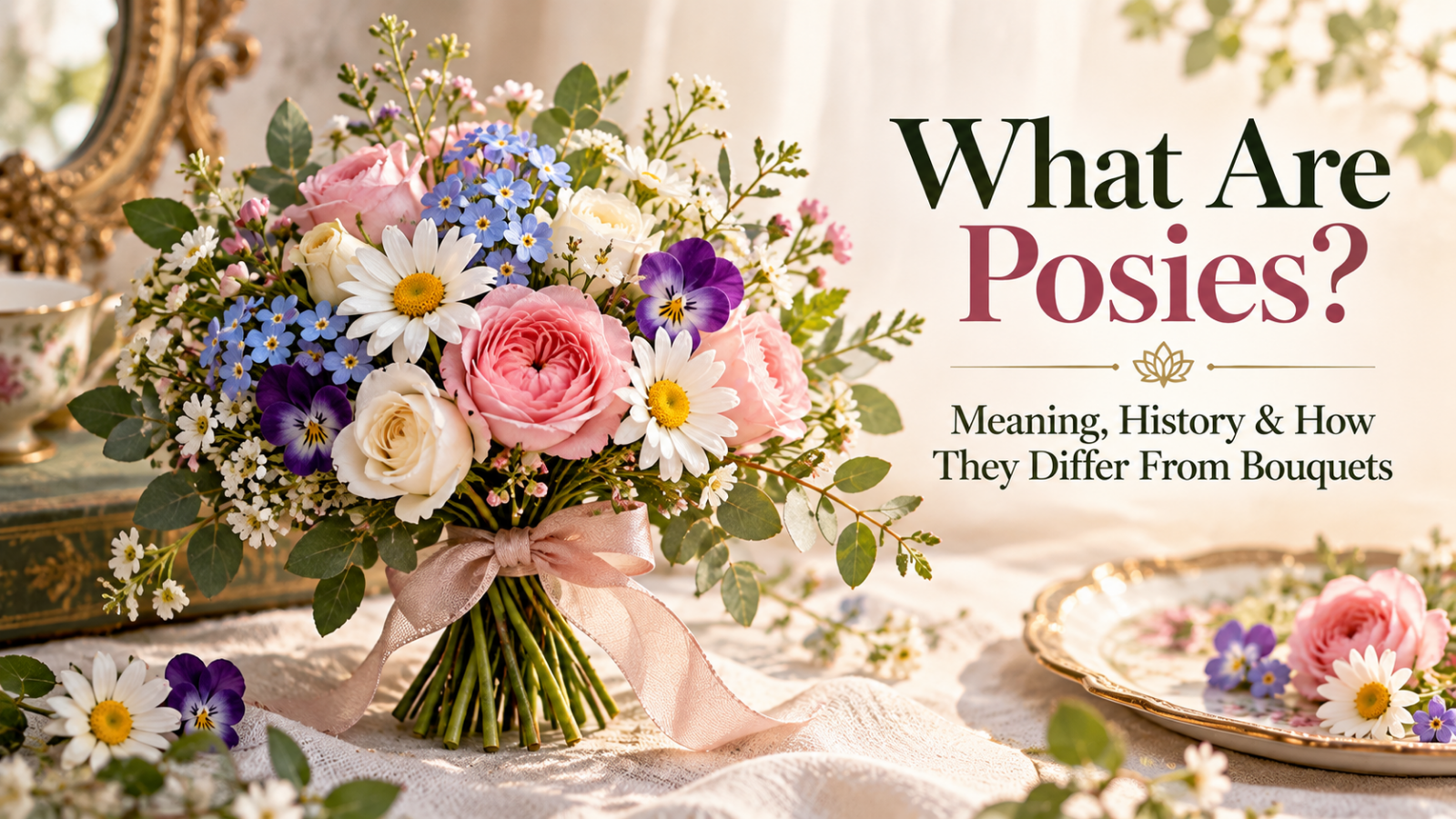
A posy is a small, compact bunch of cut flowers, usually arranged so it can be comfortably held in one hand. Posies may contain a single type of flower or a mixture of blooms and greenery, and they are commonly used for gifts, weddings, table arrangements, and small decorative displays.
The main difference between a posy and a traditional bouquet is size and structure. A posy is generally smaller, lighter, and more compact, while a bouquet can be much larger and more elaborate.
Historically, posies also carried symbolic messages. During the Victorian era, people used carefully selected flowers to communicate emotions through floriography, or the language of flowers.
Today, the coded rules are mostly gone, but the posy remains one of the simplest and most personal floral arrangements.
What Is a Posy?
A posy is a small bunch or compact arrangement of flowers.
The Cambridge Dictionary defines a posy simply as a small bunch of cut flowers, while Collins also notes that the word can refer to a nosegay or, particularly in American English, sometimes a single flower.
A typical modern posy has:
A compact shape
Relatively short stems
Flowers grouped closely together
Enough stems to create a full appearance
A size that can comfortably be held in one hand
Optional foliage or filler flowers
Ribbon, twine, or floral tape holding the stems together
Unlike a large dramatic bouquet, a posy usually emphasizes simplicity and intimacy.
It can look polished and professionally designed, but it does not have to be elaborate.
A few thoughtfully chosen flowers from a garden can form a posy.
What Does Posy Mean?
The modern floral meaning of posy is a small bunch of flowers.
However, the word has an interesting linguistic history.
Historically, “posy” could also mean a short verse, motto, or inscription, especially one engraved inside a ring or placed on a personal object.
Collins traces the word back to a shortened form of poesy, meaning poetry.
Over time, the word became increasingly associated with flowers and small floral gifts.
That older meaning is particularly interesting because both forms of the word involve sending a message:
A written posy communicated something through words.
A flower posy communicated something through blooms.
What Is a Posy Bouquet?
A posy bouquet is a compact, usually rounded floral arrangement designed to be carried easily in one hand.
It commonly has a neat, balanced shape rather than the loose, cascading appearance of some larger bouquets.
Typical characteristics include:
Small to medium size
The bouquet is designed to remain manageable and lightweight.
Shorter stems
The stems are usually cut shorter than those in large hand-tied arrangements.
Rounded shape
Many posy bouquets have a compact dome-like appearance.
Closely arranged flowers
The blooms are often grouped tightly enough to create a full visual effect.
Easy handling
This is one reason posies remain popular for brides and bridesmaids.
Not every florist uses the term in exactly the same way, so size can vary somewhat.
The defining idea is simply a compact bouquet rather than a large arrangement.
Posy vs Bouquet: What's the Difference?The biggest difference between a posy and bouquet is size.
| Feature | Posy | Bouquet |
|---|---|---|
| Size | Small and compact | Small to very large |
| Shape | Often rounded | Many possible styles |
| Stems | Usually short | Varies |
| Weight | Light | Can be heavier |
| Flowers | Few to moderate number | Potentially many |
| Main use | Gifts, weddings, small displays | Gifts, weddings, events, decoration |
| Ease of holding | Very easy | Depends on size |
A posy can technically be considered a type of bouquet.
But not every bouquet is a posy.
Think of it this way:
Posy = a specific small bouquet style
Bouquet = the broader category
A huge cascading bridal arrangement is a bouquet but not a posy.
A neat group of twelve small stems tied with ribbon could easily be both.
Posy vs Nosegay: Are They the Same?The terms posy and nosegay are often used interchangeably.
Historically, a nosegay referred to a small bunch of fragrant flowers and herbs.
The word can be understood from its parts:
Nose refers to smell.
Gay historically meant something decorative or pleasant.
Nosegays were therefore strongly associated with fragrance.
Over time, the distinctions between posy, nosegay, and small bouquet became less strict.
Today, most people would understand all three as referring to a small floral arrangement, although “posy” is more common in modern everyday floristry in some regions.
What Is a Tussie-Mussie?A tussie-mussie is another historical term closely related to a posy or nosegay.
Traditionally, a tussie-mussie was a small arrangement of flowers and herbs, often chosen partly for fragrance and partly for symbolic meaning.
Victorian flower-language traditions made these arrangements particularly famous.
A flower might be selected not only because it looked beautiful but because it carried a specific message.
In modern usage, the term tussie-mussie sounds much more historical than “posy,” but the concepts overlap considerably.
Posy vs BoutonnièreA posy should also not be confused with a boutonnière.
A boutonnière is a very small floral arrangement worn on clothing, usually attached to a jacket lapel.
A posy is normally carried or placed in a vase.
| Posy | Boutonnière |
|---|---|
| Hand-held or displayed | Worn on clothing |
| Several flowers possible | Usually one main bloom |
| Larger | Very small |
| Used for gifts and weddings | Common at weddings and formal events |
A posy may be small, but it is generally much larger than a boutonnière.
History of the PosySmall flower bunches have existed for centuries, but posies became particularly famous through their connection with Victorian floriography.
In Victorian society, strict social conventions could make direct emotional communication difficult.
Flowers became one way to send a message.
Different flowers could symbolize:
Love
Friendship
Admiration
Remembrance
Rejection
Loyalty
Hope
Gratitude
A carefully arranged posy could therefore function almost like a written note.
The recipient might interpret its meaning according to the types and colours of flowers included.
Victorian Posies and the Language of Flowers
During the Victorian era, flower symbolism became especially elaborate.
People consulted flower dictionaries to understand what particular flowers were supposed to mean.
For example:
Red roses were associated with romantic love.
Forget-me-nots suggested remembrance.
Daisies could represent innocence.
Violets were linked with modesty and faithfulness.
Even the way flowers were presented could sometimes form part of the message.
Floraly notes a Victorian tradition in which presenting a posy with the right hand indicated “yes,” while presenting it with the left could indicate “no.”
Modern floristry no longer follows those rules strictly, but the tradition helped create our continuing fascination with flower meanings.
What Do Posies Symbolize Today?Today, a posy does not have one universal symbolic meaning.
Instead, its meaning depends largely on:
The flowers included
Their colours
The occasion
The relationship between giver and recipient
In general, giving someone a posy can communicate:
Affection
Friendship
Appreciation
Congratulations
Sympathy
Love
Encouragement
Remembrance
Because a posy is smaller than an extravagant bouquet, it often feels more personal and understated.
It can say:
“I was thinking of you.”
without feeling overly formal.
Posy Flower Color MeaningsColour can help shape the message of a posy.
Red Posy Meaning
Red flowers generally symbolize:
Love
Passion
Desire
Romance
A red rose posy is especially suitable for a romantic partner.
Pink Posy Meaning
Pink flowers commonly represent:
Affection
Admiration
Gratitude
Gentle love
Joy
Pink posies are versatile and work well for birthdays, Mother's Day, thank-you gifts, and romantic occasions.
White Posy Meaning
White flowers commonly symbolize:
Purity
Peace
Innocence
Respect
Remembrance
White posies work especially well for weddings and sympathy arrangements.
Yellow Posy Meaning
Yellow flowers usually communicate:
Friendship
Happiness
Optimism
Joy
Positive energy
A yellow posy is a particularly good choice for cheering someone up.
Purple Posy Meaning
Purple flowers can symbolize:
Dignity
Admiration
Creativity
Royalty
Respect
A purple posy can make an elegant congratulations or achievement gift.
Blue Posy Meaning
Blue flowers are often associated with:
Trust
Loyalty
Calm
Faith
Peace
Blue blooms can add a soothing quality to a posy.
Best Flowers for a PosyAlmost any cut flower can be used in a posy if its size and stem length suit the arrangement.
Some especially useful options include:
Roses
Roses work beautifully as the main flower in a posy.
Use:
Red for love
Pink for appreciation
White for purity
Yellow for friendship
Daisies
Daisies give a posy a cheerful, informal appearance.
They symbolize innocence, happiness, and new beginnings.
For more on their symbolism, read our guide to Daisy Flower Meaning.
Iris
Iris flowers can add height, texture, and rich colour.
They commonly symbolize hope, faith, wisdom, and courage.
Explore their symbolism in our Iris Flower Meaning guide.
Forget-Me-Nots
Forget-me-nots are ideal when you want a posy to communicate:
Remembrance
Loyalty
Lasting connection
Their small flowers also suit the compact scale of a posy.
Carnations
Carnations are practical, long-lasting, and available in many colours.
They can symbolize love, admiration, gratitude, and affection.
Violets
Violets have longstanding connections with modesty, loyalty, and faithfulness.
Their small scale works naturally in traditional-style posies.
Baby's Breath
Baby's breath adds softness and volume without making the arrangement too heavy.
It is often associated with purity and everlasting love.
Lavender
Lavender adds fragrance as well as colour.
Its symbolism includes calm, devotion, serenity, and grace.
Can You Put Gladiolus in a Posy?Gladiolus is normally associated with tall arrangements because of its long flower spikes.
However, individual gladiolus florets or shortened stems may be incorporated creatively into compact designs.
For symbolism, gladiolus represents strength, integrity, courage, and perseverance.
See our complete Gladiolus Flower Meaning guide.
What Is a Bridal Posy?A bridal posy is a small, compact wedding bouquet carried by the bride.
It typically has:
A rounded form
Short to medium stems
Closely grouped flowers
A lightweight design
Ribbon or decorative binding
Posy bouquets remain popular because they are elegant without overwhelming the bride or dress.
They work particularly well for:
Minimalist weddings
Civil ceremonies
Garden weddings
Vintage weddings
Brides who prefer lighter bouquets
A bridal posy can be made from one flower type or a mixture of blooms.
Why Are Posy Bouquets Popular for Weddings?The size is one of their biggest advantages.
A smaller bouquet:
Is easier to carry
Does not hide the wedding dress
Feels comfortable during long ceremonies
Photographs well
Works for both brides and bridesmaids
Can cost less than very large arrangements
A posy can also create a more intimate and romantic appearance than an oversized bouquet.
Bridal Posy vs Bridesmaid PosyBoth brides and bridesmaids can carry posies.
The difference is usually in scale or flower choice.
For example:
Bride: larger white-and-pink rose posy
Bridesmaids: smaller pink rose-and-daisy posies
Using the same basic flower palette in slightly different sizes helps create visual consistency.
When Should You Give Someone a Posy?Because posies are compact and personal, they suit many occasions.
Birthday
Choose flowers based on the recipient's favourite colors or birth flowers.
You can explore our full Birth Flowers by Month guide for personalized ideas.
Thank You
A small posy feels thoughtful without being excessive.
Pink, yellow, or mixed seasonal flowers work particularly well.
Get Well Soon
Choose cheerful flowers such as daisies or yellow blooms.
Congratulations
Purple, orange, or bright mixed flowers can celebrate success.
Sympathy
A white or softly colored posy can provide a gentle expression of remembrance and support.
Romantic Gift
Roses, pink flowers, or deep red blooms can create an intimate romantic posy.
Just Because
One of the best uses of a posy is giving flowers without requiring a major occasion.
Its small size makes the gesture feel spontaneous.
What Is a Posy Jar?A posy jar is simply a small vase or jar designed to display a compact floral arrangement.
Because posies have shorter stems and smaller proportions, they often look better in a smaller container than in a tall traditional vase.
Suitable containers include:
Small glass jars
Bud vases
Short ceramic vases
Mason jars
Vintage bottles
The container should support the flowers without leaving too much empty space around the stems.
How to Make a PosyMaking a posy at home is relatively easy.
Step 1: Choose Your Flowers
Select a small number of main flowers plus optional filler blooms and greenery.
For example:
3 roses
3 daisies
A few forget-me-nots
Baby's breath
Eucalyptus
Step 2: Prepare the Stems
Remove leaves that would sit below the waterline.
Trim damaged foliage and cut the stems to a similar manageable length.
Step 3: Start With the Main Flowers
Hold your focal flowers loosely in one hand.
Arrange them so their heads sit at slightly different angles rather than all facing in exactly the same direction.
Step 4: Add Smaller Flowers
Place filler flowers around and between the larger blooms.
Rotate the arrangement as you work so it remains balanced from every side.
Step 5: Add Greenery
Use a small amount of foliage around the outside.
Avoid adding so much greenery that the arrangement stops looking compact.
Step 6: Tie the Stems
Secure the arrangement with:
Ribbon
Twine
Floral tape
Tie it firmly enough to hold its shape without crushing the stems.
Step 7: Trim the Bottom
Cut the stems to an even length.
If the posy is going into a vase, cut the stems at an angle before placing them in clean water.
How Many Flowers Are in a Posy?There is no official number.
A posy may contain:
Only a few larger flowers
Around half a dozen main stems
More stems if smaller flowers are being used
The important factor is proportion, not stem count.
The finished arrangement should remain small enough to be comfortably carried in one hand.
Is a Posy Cheaper Than a Bouquet?Often, but not always.
Because a posy generally contains fewer flowers, it can cost less than a large bouquet.
However, price depends heavily on:
Flower variety
Season
Rarity
Florist labor
Imported vs local flowers
Arrangement complexity
A small posy made with premium garden roses or peonies may cost more than a larger arrangement made with inexpensive seasonal blooms.
Size alone does not determine price.
Are Posies Only for Women?No.
Posies can be given to anyone.
Modern flower gifting does not need to follow old gender conventions.
A posy can be customized using:
Bold colors
Native flowers
Minimalist greenery
Wildflowers
Monochrome arrangements
Seasonal blooms
The important thing is choosing flowers that suit the recipient.
Posy vs CorsageA corsage is a small floral arrangement designed to be worn, usually on the wrist or attached to clothing.
A posy is normally held or displayed.
The difference is therefore primarily function.
Posy: carried.
Corsage: worn.
Posy vs Flower Arrangement“Flower arrangement” is a broad category.
It can refer to:
Posies
Bouquets
Vase arrangements
Wreaths
Centerpieces
Floral installations
A posy is therefore one specific type of flower arrangement.
What Is a Posy Ring?The word posy has another fascinating historical meaning unrelated to flower bouquets.
A posy ring, also spelled poesy or posey ring, was a ring engraved with a short message, motto, or verse.
Common inscriptions expressed ideas of:
Love
Loyalty
Friendship
Devotion
Faith
This relates to the older meaning of “posy” as a short verse or inscription.
It also helps explain why the word has such a strong association with small, meaningful messages.
A flower posy sends its message through blooms.
A posy ring sent its message through words.
Frequently Asked Questions About PosiesWhat are posies?
Posies are small, compact bunches of cut flowers, usually designed to be comfortably held in one hand.
What is the difference between a posy and a bouquet?
A posy is generally smaller, lighter, and more compact. Bouquet is the broader term and may refer to arrangements ranging from small hand-tied flowers to large elaborate designs.
Is a posy the same as a nosegay?
The terms overlap considerably. Historically, a nosegay placed more emphasis on fragrant flowers and herbs, while modern usage often treats posy and nosegay as similar small floral arrangements.
What does a posy symbolize?
A posy does not have one fixed meaning. Its symbolism depends on the flowers and colors included. Generally, it can express affection, friendship, appreciation, love, sympathy, or remembrance.
Why is it called a posy?
The word is historically related to “poesy,” meaning poetry. Posy could once refer to a short verse or inscription before becoming strongly associated with small flower bunches.
What is a wedding posy?
A wedding posy is a small, compact bridal or bridesmaid bouquet that can comfortably be carried in one hand.
What flowers are best for a posy?
Roses, daisies, carnations, violets, forget-me-nots, lavender, baby's breath, and many seasonal flowers work well.
How big is a posy bouquet?
There is no fixed measurement, but it should generally remain small enough to hold comfortably in one hand.
Can a posy contain only one type of flower?
Yes. A posy can be made entirely from roses, daisies, carnations, tulips, or almost any suitable flower.
Can you make a posy with dried flowers?
Yes. Dried lavender, roses, baby's breath, strawflowers, and other preserved blooms can create long-lasting posies.
Are posies good wedding bouquets?
Yes. Their compact size makes them particularly comfortable for brides and bridesmaids.
What is the difference between a posy and a corsage?
A posy is carried or displayed, while a corsage is designed to be worn on clothing or the wrist.
What is a tussie-mussie?
A tussie-mussie is a traditional small bouquet of flowers and herbs, historically associated with fragrance and symbolic flower language.
What is a posy ring?
A posy ring is a historic ring engraved with a short verse, motto, or affectionate message. The name relates to the older literary meaning of “posy.”
Final Thoughts: What Are Posies?So, what are posies?
A posy is simply a small, compact arrangement of flowers, usually designed to be carried comfortably in one hand or displayed in a small vase.
But its history makes it far more interesting than the definition suggests.
Victorian posies became tools of communication through the language of flowers. Different blooms could represent love, friendship, loyalty, rejection, remembrance, or hope.
Today, most people no longer follow those elaborate floral codes.
Yet the idea behind the posy remains largely unchanged.
It is a small floral gesture carrying a personal message.
Compared with a large bouquet, a posy feels lighter, simpler, and often more intimate.
It works beautifully for birthdays, weddings, sympathy, congratulations, thank-you gifts, romantic gestures, or simply letting someone know you are thinking about them.
And that may be the real reason posies have lasted for so long:
they prove that a flower arrangement does not need to be large to say something meaningful.
For more flower symbolism and gifting inspiration, explore our Birth Flowers by Month, Daisy Flower Meaning, Iris Flower Meaning, and Gladiolus Flower Meaning guides.
Keep reading
 Meaning & Symbolism
December Birth Flowers: Narcissus & Holly Meanings
Discover the December birth flowers narcissus and holly their meanings, symbolism, history, personality traits, gifting ideas, tattoo meanings, and festive traditions.
Read the guide → Meaning & Symbolism
Gladiolus Flower Meaning: Symbolism, Colors & Spiritual Significance
Discover the gladiolus flower meaning, including strength, integrity, love, remembrance, color symbolism, August birth-flower significance, history, tattoos, and gifting.
Read the guide →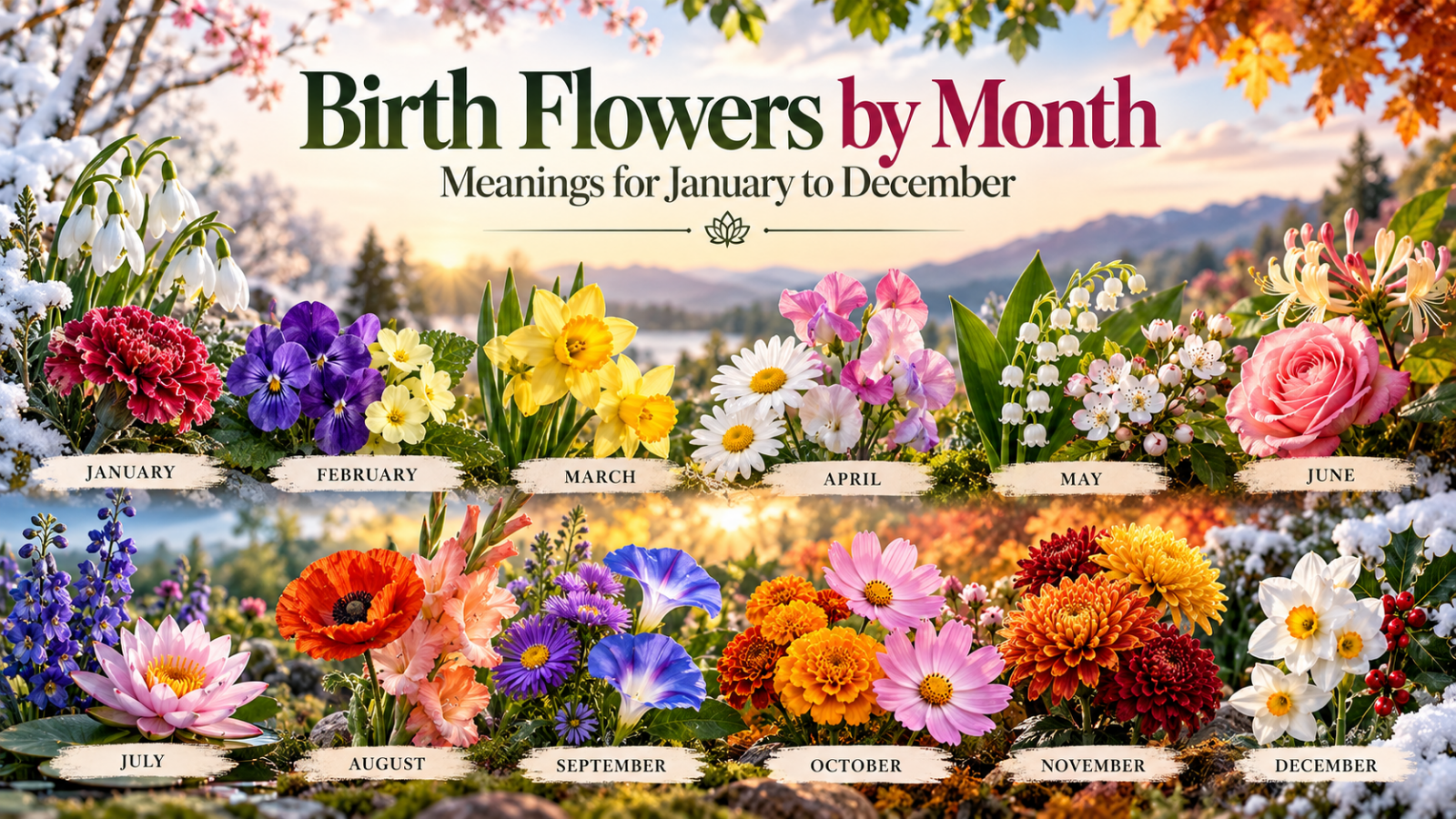 Meaning
Birth Flowers by Month: Complete Guide & Meanings
Discover birth flowers by month from January to December, including primary and secondary flowers, their meanings, symbolism, personality traits, and gift ideas.
Read the guide →