Meaning
Birth Flowers by Month: Complete Guide & Meanings
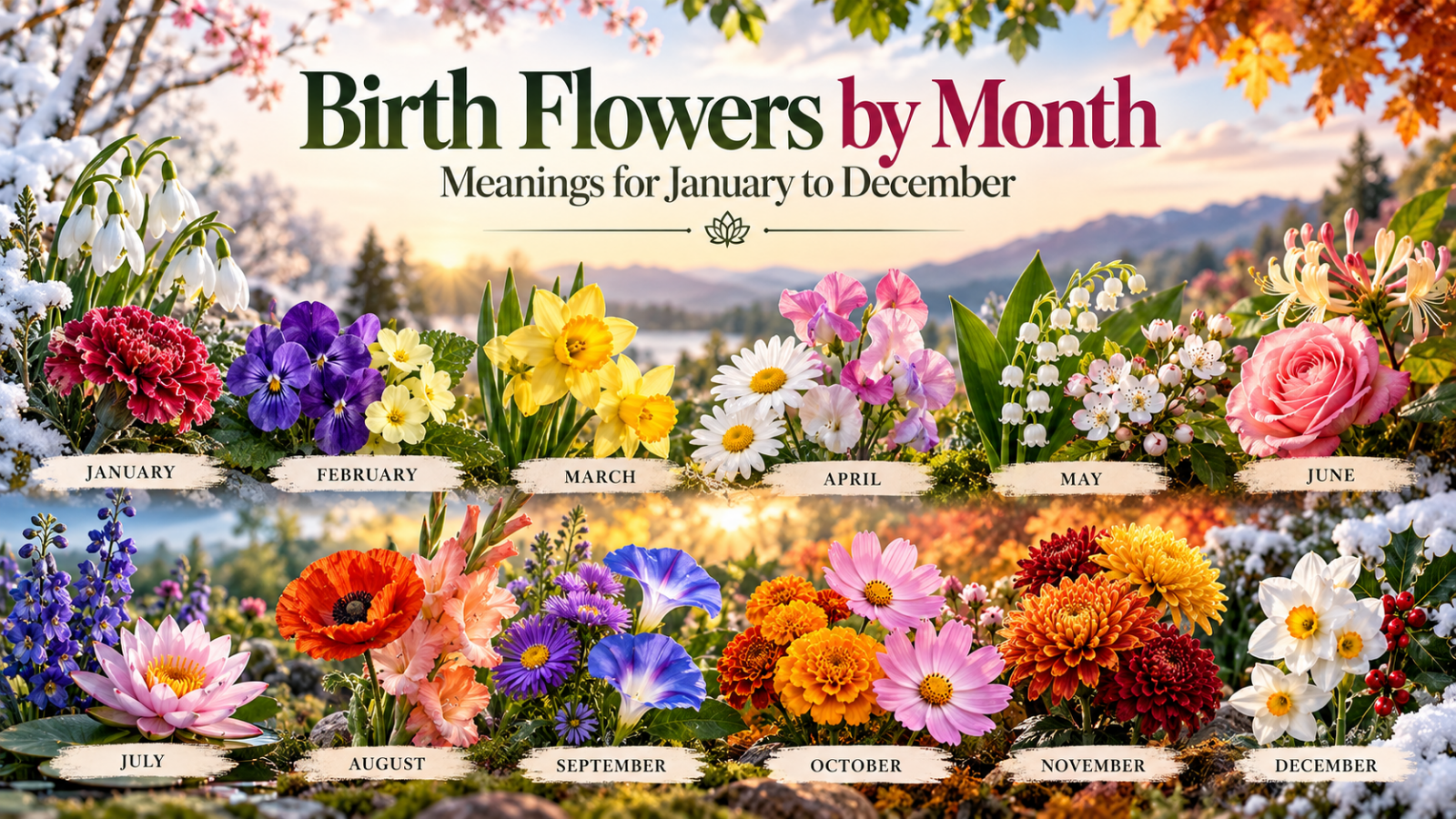
Every month of the year has a traditional birth flower, much like birthstones and zodiac signs. These flowers are associated with symbolic meanings ranging from love and hope to strength, remembrance, purity, and new beginnings.
The traditional birth flowers by month begin with carnations and snowdrops in January and end with narcissus and holly in December. Most months have two commonly recognized flowers, although exact lists can vary between traditions.
If you simply want to find your birth flower, use this quick chart:
| Month | Primary Birth Flower | Secondary Birth Flower | Main Meaning |
|---|---|---|---|
| January | Carnation | Snowdrop | Love, devotion, hope |
| February | Violet | Primrose | Faithfulness, modesty, young love |
| March | Daffodil | Jonquil | New beginnings, rebirth, happiness |
| April | Daisy | Sweet Pea | Innocence, loyalty, gratitude |
| May | Lily of the Valley | Hawthorn | Happiness, purity, hope, protection |
| June | Rose | Honeysuckle | Love, devotion, affection |
| July | Larkspur | Water Lily | Positivity, dignity, enlightenment |
| August | Gladiolus | Poppy | Strength, integrity, remembrance |
| September | Aster | Morning Glory | Wisdom, love, patience |
| October | Marigold | Cosmos | Warmth, remembrance, harmony |
| November | Chrysanthemum | — | Joy, loyalty, longevity |
| December | Narcissus | Holly | Renewal, faithfulness, protection |
Modern sources generally agree on most primary birth flowers, although secondary flowers can differ between lists. There is no single international authority that officially determines every birth-month flower.
What Are Birth Flowers?
Birth flowers are flowers traditionally associated with each month of the year.
Similar to birthstones, they are often used to represent the characteristics, emotions, or symbolic qualities associated with people born during a particular month.
For example:
January's carnation represents love and devotion.
April's daisy represents innocence and loyal love.
June's rose represents love and beauty.
October's marigold symbolizes warmth, creativity, and remembrance.
Birth flowers are commonly used today for:
Birthday bouquets
Jewelry
Tattoos
Personalized gifts
Wedding designs
Greeting cards
Memorial art
Home décor
Their appeal comes from combining a birthday month with the traditional language and symbolism of flowers.
Is There an Official Birth Flower for Every Month?
Not exactly.
There is no single worldwide organization responsible for officially assigning flowers to the 12 months.
Instead, today's birth-flower lists developed from a combination of flower symbolism, seasonal associations, gardening traditions, and historical floriography.
That explains why some sources give only one flower for a month while others give two.
For example, November is frequently represented simply by the chrysanthemum, while some modern sources add a secondary flower such as peony.
December may be represented by narcissus and holly, while some modern lists also include poinsettia.
The Old Farmer's Almanac currently lists primary and secondary birth flowers for most months and remains one of the most widely referenced modern birth-flower calendars.
January Birth Flowers: Carnation and SnowdropJanuary begins the birth-flower calendar with carnations and snowdrops.
Carnation Meaning
Carnations symbolize:
Love
Devotion
Fascination
Loyalty
Admiration
Their ruffled petals and long vase life make carnations particularly appropriate symbols of lasting affection.
Color can alter their meaning.
Red carnations symbolize deep love.
Pink carnations represent gratitude and affection.
White carnations symbolize purity and good luck.
Yellow carnations have historically carried more complicated meanings such as disappointment or rejection.
Snowdrop Meaning
Snowdrops represent:
Hope
Purity
Innocence
Renewal
New beginnings
Their symbolism comes largely from the fact that they are among the earliest flowers to emerge around the end of winter in many northern climates.
A snowdrop growing through cold conditions creates a natural image of hope after hardship.
January Birth Flower Personality
Symbolically, January-born people may be described as:
Loyal
Determined
Loving
Resilient
Hopeful
February's traditional birth flowers are violet and primrose.
Violet Meaning
Violets commonly symbolize:
Faithfulness
Modesty
Humility
Loyalty
Spiritual wisdom
Their small size gives them a quiet, understated quality that fits their traditional association with modesty.
Purple violets may also carry associations with wisdom and spirituality.
Primrose Meaning
Primroses are associated with:
Young love
Youthfulness
New beginnings
Affection
Renewal
The name primrose comes from a Latin-rooted expression relating to being among the first roses or flowers of spring.
Because primroses appear early in the growing season, they naturally became symbols of youth and fresh beginnings.
February Birth Flower Personality
February birth flowers suggest someone who is:
Faithful
Thoughtful
Modest
Romantic
Sensitive
March is associated with the cheerful daffodil, with jonquil commonly treated as another March birth flower.
Daffodil Meaning
Daffodils symbolize:
New beginnings
Rebirth
Happiness
Hope
Renewal
Resilience
Few flowers fit the idea of spring renewal better.
Daffodils frequently appear after winter, making them natural symbols of life returning after dormancy.
Jonquil Meaning
Jonquils are members of the broader Narcissus group and are closely related to daffodils.
Their symbolic meanings include:
Affection
Desire
Happiness
Rebirth
Success
Some traditional flower-language interpretations connect jonquils with the desire for affection to be returned.
March Birth Flower Personality
March flowers suggest:
Optimism
Resilience
Creativity
Warmth
Hopefulness
April's traditional birth flowers are the daisy and sweet pea.
Daisy Meaning
Daisies symbolize:
Innocence
Purity
Loyal love
Happiness
New beginnings
Sincerity
The classic white daisy has become particularly strongly associated with childhood, honesty, and uncomplicated happiness.
Daisies are also traditionally associated with loyal love.
For a complete explanation of colors, love symbolism, spiritual significance, and tattoo meanings, see our Daisy Flower Meaning guide.
Sweet Pea Meaning
Sweet peas symbolize:
Gratitude
Pleasure
Friendship
Farewell
Appreciation
Their sweet fragrance and delicate flowers contributed to their popularity in gardens and bouquets.
A sweet pea can carry the message:
“Thank you for a wonderful time.”
April Birth Flower Personality
The symbolic traits associated with April include:
Cheerfulness
Loyalty
Optimism
Honesty
Gratitude
May's traditional birth flowers are lily of the valley and hawthorn.
Lily of the Valley Meaning
Lily of the valley symbolizes:
Return of happiness
Purity
Sweetness
Humility
Good luck
Renewal
Its small white bell-shaped flowers make it one of the most delicate-looking spring blooms.
Its most distinctive traditional meaning is “return to happiness.”
Hawthorn Meaning
Hawthorn symbolizes:
Hope
Protection
Love
Fertility
Happiness
Renewal
Hawthorn is particularly connected with European spring traditions because its blossoms commonly appear around May.
Its thorny branches also helped create associations with protection and boundaries.
For the complete history, symbolism, folklore, safety information, tattoo meaning, and color interpretations, see our May Birth Flowers: Lily of the Valley & Hawthorn guide.
May Birth Flower Personality
May flowers suggest someone who may be:
Hopeful
Caring
Gentle
Protective
Resilient
June's traditional flowers are two of the most fragrant and romantic plants on the list: rose and honeysuckle.
Rose Meaning
Roses are among the world's best-known symbolic flowers.
Their broader meanings include:
Love
Beauty
Passion
Respect
Devotion
Color dramatically changes rose symbolism.
Red rose: romantic love and passion
Pink rose: admiration and gratitude
White rose: purity and innocence
Yellow rose: friendship and joy
Orange rose: enthusiasm and desire
Honeysuckle Meaning
Honeysuckle symbolizes:
Affection
Devotion
Happiness
Sweetness
Everlasting bonds
The plant's climbing growth habit has helped reinforce ideas of attachment and lasting connection.
June Birth Flower Personality
June symbolism suggests:
Romantic
Affectionate
Loving
Charismatic
Devoted
July is represented by larkspur and water lily.
Larkspur Meaning
Larkspur symbolizes:
Positivity
Dignity
Grace
An open heart
Joy
Its tall flower spikes create a dramatic appearance in gardens and floral arrangements.
Different larkspur colors can also carry different meanings.
Blue and purple varieties commonly communicate dignity and grace, while pink flowers may express affection.
Water Lily Meaning
Water lilies represent:
Rebirth
Purity
Enlightenment
Peace
Spiritual awakening
Their symbolism comes from their aquatic growth.
The flower appears clean and beautiful above water even though its roots are anchored below the surface.
This symbolism resembles certain aspects of the lotus, although lotus and water lily are botanically different plants.
For related spiritual symbolism, explore our Lotus Flower Meaning guide.
July Birth Flower Personality
July birth flowers suggest:
Positive
Open-hearted
Calm
Reflective
Strong
August's flowers combine strength with remembrance: gladiolus and poppy.
Gladiolus Meaning
Gladiolus symbolizes:
Strength
Integrity
Courage
Determination
Sincerity
The flower's name comes from gladius, the Latin word for sword, referring to its sword-like leaves.
That physical association helped inspire symbolism surrounding strength and character.
Poppy Meaning
Poppies commonly symbolize:
Remembrance
Peace
Sleep
Imagination
Consolation
Red poppies became internationally associated with remembrance, particularly in connection with those who died in war.
Other poppy colors may carry different symbolic interpretations.
August Birth Flower Personality
August symbolism suggests someone who is:
Strong
Determined
Independent
Courageous
Compassionate
September's birth flowers are aster and morning glory.
Aster Meaning
Asters symbolize:
Wisdom
Love
Faith
Patience
Valor
The name comes from the Greek word associated with star, referring to the flower's star-like appearance.
Asters resemble daisies but belong to their own botanical groups within the Asteraceae family.
Morning Glory Meaning
Morning glories symbolize:
Affection
Love
Renewal
Mortality
The beauty of life
The flowers usually open early in the day and often fade relatively quickly.
That short-lived beauty contributed to symbolism surrounding the temporary nature of life.
September Birth Flower Personality
September flowers suggest:
Wise
Loyal
Thoughtful
Loving
Patient
October's traditional birth flowers are marigold and cosmos.
They form one of the most interesting symbolic combinations in the birth-flower calendar.
Marigold Meaning
Marigolds symbolize:
Warmth
Creativity
Passion
Joy
Prosperity
Remembrance
Their brilliant orange, yellow, and red colors naturally suggest sunlight and energy.
Yet marigolds also have powerful cultural associations with remembrance, especially through traditions such as Día de los Muertos.
Cosmos Meaning
Cosmos flowers represent:
Harmony
Balance
Peace
Love
Innocence
Order
Their name is connected with the Greek concept of an ordered or harmonious arrangement.
That makes cosmos the calmer symbolic counterpart to the fiery marigold.
For color meanings, cultural symbolism, tattoo meanings, and gifting ideas, see our complete October Birth Flowers: Marigold & Cosmos guide.
October Birth Flower Personality
October symbolism combines:
Warmth
Balance
Creativity
Loyalty
Determination
Peacefulness
November's primary and most consistently recognized birth flower is the chrysanthemum.
Unlike many other months, some major birth-flower lists do not consistently assign November a second flower. Current Almanac-style lists commonly identify chrysanthemum alone.
Chrysanthemum Meaning
Chrysanthemums symbolize:
Joy
Loyalty
Happiness
Friendship
Longevity
Good fortune
The precise meaning depends strongly on color and cultural context.
Red chrysanthemums may symbolize love.
Yellow chrysanthemums often suggest happiness and friendship.
White chrysanthemums can represent purity, honesty, or remembrance.
Chrysanthemums also carry very different cultural meanings around the world, so context matters.
November Birth Flower Personality
Chrysanthemum symbolism suggests someone who is:
Loyal
Positive
Dependable
Friendly
Resilient
December closes the calendar with narcissus and holly.
Paperwhite narcissus is especially commonly associated with December.
Narcissus Meaning
Narcissus flowers symbolize:
Rebirth
Renewal
Faithfulness
Hope
New beginnings
Their ability to bloom during cooler periods helped reinforce their associations with renewal and persistence.
Holly Meaning
Holly symbolizes:
Protection
Goodwill
Friendship
Faithful love
Life and endurance
Its evergreen leaves remain green during winter, giving holly an obvious association with persistence and life during the darkest part of the year.
Holly later became one of the plants most strongly associated with Christmas traditions.
December Birth Flower Personality
December birth flowers suggest:
Resilience
Loyalty
Hopefulness
Generosity
Strength
Here is the entire birth-flower calendar in a simplified format:
January — Carnation & Snowdrop: Love, devotion, hope
February — Violet & Primrose: Faithfulness, humility, young love
March — Daffodil & Jonquil: New beginnings, renewal, affection
April — Daisy & Sweet Pea: Innocence, loyal love, gratitude
May — Lily of the Valley & Hawthorn: Returning happiness, hope, protection
June — Rose & Honeysuckle: Love, beauty, devotion
July — Larkspur & Water Lily: Positivity, dignity, enlightenment
August — Gladiolus & Poppy: Strength, integrity, remembrance
September — Aster & Morning Glory: Wisdom, love, patience
October — Marigold & Cosmos: Warmth, remembrance, harmony
November — Chrysanthemum: Joy, loyalty, longevity
December — Narcissus & Holly: Renewal, faithfulness, protection
Why Do Some Months Have Two Birth Flowers?You may notice that most months have more than one flower.
This happens because birth-flower traditions developed from multiple sources rather than from one standardized official system.
Regional gardening traditions, historical flower symbolism, seasonal flowering patterns, and modern floral guides have all influenced today's lists.
This also explains disagreements between websites.
For example, some modern lists add iris as a February flower, peony as a November flower, or poinsettia as an additional December flower.
These alternatives are not necessarily “wrong.”
They represent different traditions.
For consistency, it is best to choose one recognized calendar and clearly explain when alternative flowers exist rather than pretending there is one universally official list.
Birth Flowers vs. BirthstonesBirth flowers and birthstones serve a similar purpose.
Both associate a person's birth month with a natural symbol.
However:
Birth flowers use flowers and floral symbolism.
Birthstones use gemstones.
A person born in April, for example, may be associated with the daisy as a flower and the diamond as a gemstone.
Many personalized gifts combine both.
Birth flowers can be particularly meaningful for:
Jewelry designs
Birthday cards
Tattoo compositions
Family illustrations
Personalized bouquets
Birth-month artwork
A birth flower becomes more meaningful when you consider both the month and the flower's message.
For a Birthday
Choose the recipient's primary birth flower or combine both flowers associated with the month.
For a Romantic Partner
Choose the birth flower but adjust the color to communicate love.
A June-born partner, for example, might receive red roses rather than yellow ones.
For a Friend
Use colors associated with friendship and happiness.
Yellow flowers often work especially well.
For Someone Starting a New Chapter
Look for birth flowers with meanings related to:
Hope
Renewal
New beginnings
Courage
Daffodils, daisies, snowdrops, and lily of the valley are particularly suitable.
For Remembrance
Flowers such as:
Poppies
Marigolds
White chrysanthemums
can carry especially strong remembrance symbolism depending on cultural context.
Birth Flower Tattoo MeaningBirth-flower tattoos have become popular because they allow a person to represent a birthday without writing a date.
A tattoo might represent:
Your own birth month
Your child's birthday
A parent's birth month
A partner
A deceased loved one
Several family members
Multiple birth flowers can be combined into a family bouquet.
For example, a tattoo might combine a May lily of the valley, October marigold, and April daisy to represent three family members.
The result can be both decorative and personally meaningful.
Birth Flower Bouquet IdeasA birth-month bouquet does not have to contain only one type of flower.
Instead, use the birth flower as the central element and add complementary blooms.
For example:
January: carnations with winter greenery
April: daisies with sweet peas
June: roses with honeysuckle-inspired foliage
October: marigolds with cosmos
December: paperwhites with holly
This gives you the symbolic connection without restricting the arrangement.
Are Birth Flowers Based on the Northern Hemisphere?Largely, yes.
Many commonly used birth-flower calendars reflect Northern Hemisphere growing seasons.
That is why flowers associated with a particular month may not naturally bloom during the same month in Australia, South Africa, or other Southern Hemisphere locations.
Floraly also points out this seasonal mismatch in its birth-flower guide because its Australian audience may encounter flowers that are out of season during their assigned birth month.
Birth-flower symbolism therefore does not necessarily mean the flower must physically bloom where you live during that month.
What Is My Birth Flower?Use this simple list:
Born in January? Carnation or snowdrop.
Born in February? Violet or primrose.
Born in March? Daffodil or jonquil.
Born in April? Daisy or sweet pea.
Born in May? Lily of the valley or hawthorn.
Born in June? Rose or honeysuckle.
Born in July? Larkspur or water lily.
Born in August? Gladiolus or poppy.
Born in September? Aster or morning glory.
Born in October? Marigold or cosmos.
Born in November? Chrysanthemum.
Born in December? Narcissus or holly.
Frequently Asked Questions About Birth FlowersWhat are birth flowers?
Birth flowers are flowers traditionally associated with each month of the year. Each flower carries symbolic meanings that may be connected with the personality or qualities traditionally associated with people born during that month.
Does every month have a birth flower?
Yes. Every month has at least one commonly recognized birth flower, and most months have two.
What is January's birth flower?
January's traditional birth flowers are carnation and snowdrop.
What is February's birth flower?
February is commonly associated with violet and primrose.
What is March's birth flower?
March is represented by daffodil, with jonquil also commonly included.
What is April's birth flower?
April's traditional birth flowers are daisy and sweet pea.
What is May's birth flower?
May's birth flowers are lily of the valley and hawthorn.
What is June's birth flower?
June is associated with rose and honeysuckle.
What is July's birth flower?
July's birth flowers are larkspur and water lily.
What is August's birth flower?
August is represented by gladiolus and poppy.
What is September's birth flower?
September's birth flowers are aster and morning glory.
What is October's birth flower?
October is associated with marigold and cosmos.
What is November's birth flower?
Chrysanthemum is the most consistently recognized November birth flower.
What is December's birth flower?
December's traditional flowers are narcissus, particularly paperwhite narcissus, and holly.
Why do birth-flower lists differ?
There is no single worldwide authority governing birth flowers. Different historical, regional, seasonal, and modern floral traditions have produced slightly different lists.
Are birth flowers the same worldwide?
Not necessarily. The commonly used calendar is strongly influenced by Northern Hemisphere flowering seasons and English-language floral traditions.
Can I have two birth flowers?
Yes. Most months have both a primary and secondary traditional birth flower.
What is the most romantic birth flower?
The June rose is probably the birth flower most strongly associated with romantic love, particularly a red rose.
Which birth flowers symbolize new beginnings?
Daffodils, daisies, snowdrops, narcissus, and lily of the valley all carry strong associations with renewal, hope, or new beginnings.
Final Thoughts: Birth Flowers From January to DecemberThe tradition of birth flowers by month gives every birthday a botanical symbol.
From the hopeful snowdrop of January to December's resilient holly, every month tells a different story.
Some flowers represent love.
Others represent strength.
Some symbolize remembrance, while others celebrate purity, happiness, wisdom, hope, or renewal.
The primary birth flowers are:
January — Carnation
February — Violet
March — Daffodil
April — Daisy
May — Lily of the Valley
June — Rose
July — Larkspur
August — Gladiolus
September — Aster
October — Marigold
November — Chrysanthemum
December — Narcissus
The important thing to remember is that birth flowers are symbolic traditions rather than scientifically or legally fixed classifications. Different lists sometimes use different secondary flowers.
That variety is part of their charm.
Whether you are choosing a birthday bouquet, designing a tattoo, creating personalized jewelry, or simply discovering the meaning behind your own birth month, birth flowers offer a beautiful way to connect a date with nature and symbolism.
Keep reading
 Meaning & Symbolism
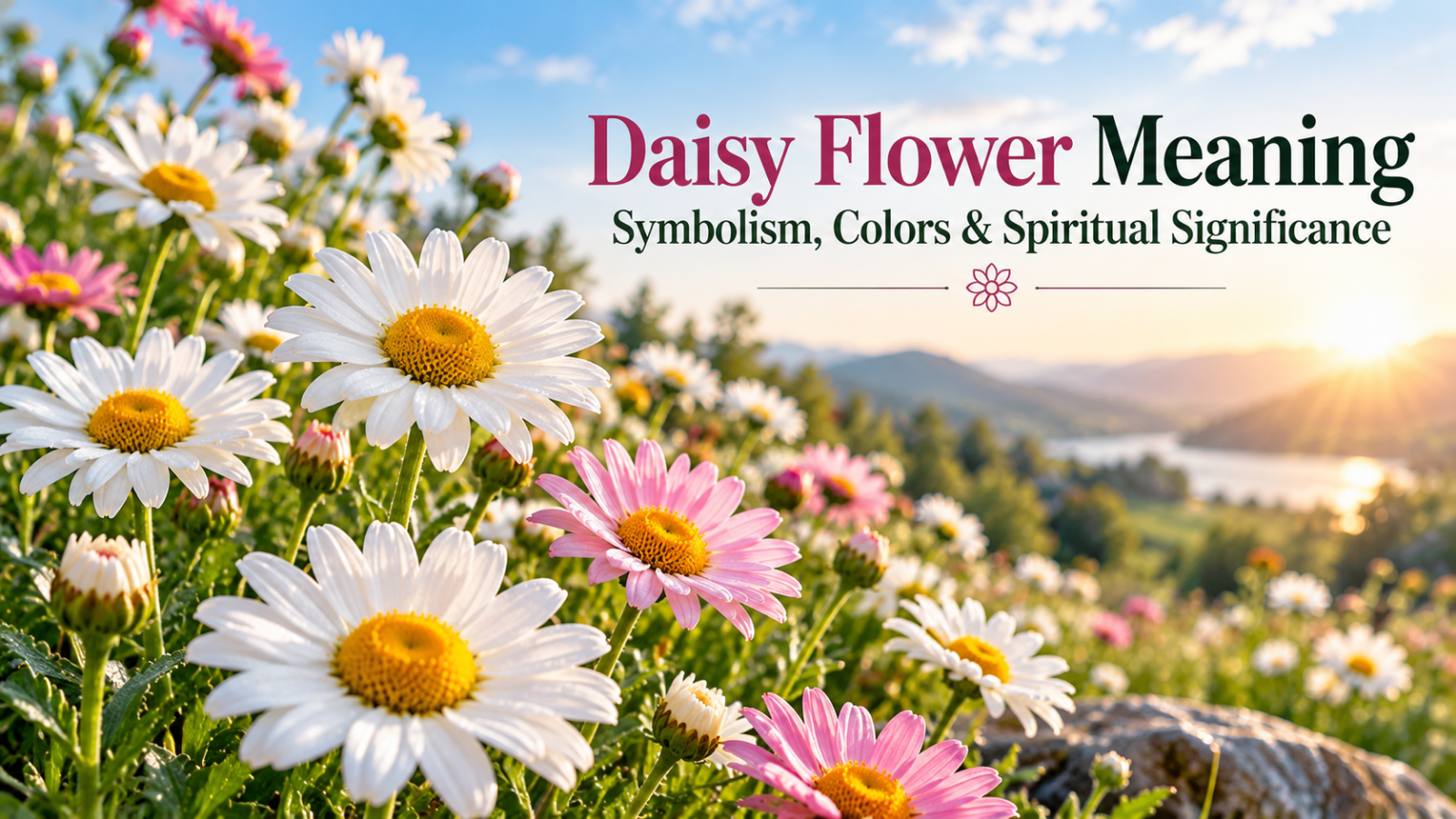
Daisy Flower Meaning: Symbolism, Colors & Spiritual Significance
Discover the daisy flower meaning, including symbolism of purity, innocence, love, new beginnings, colors, spiritual meaning, April birth-flower significance, and more.
Read the guide →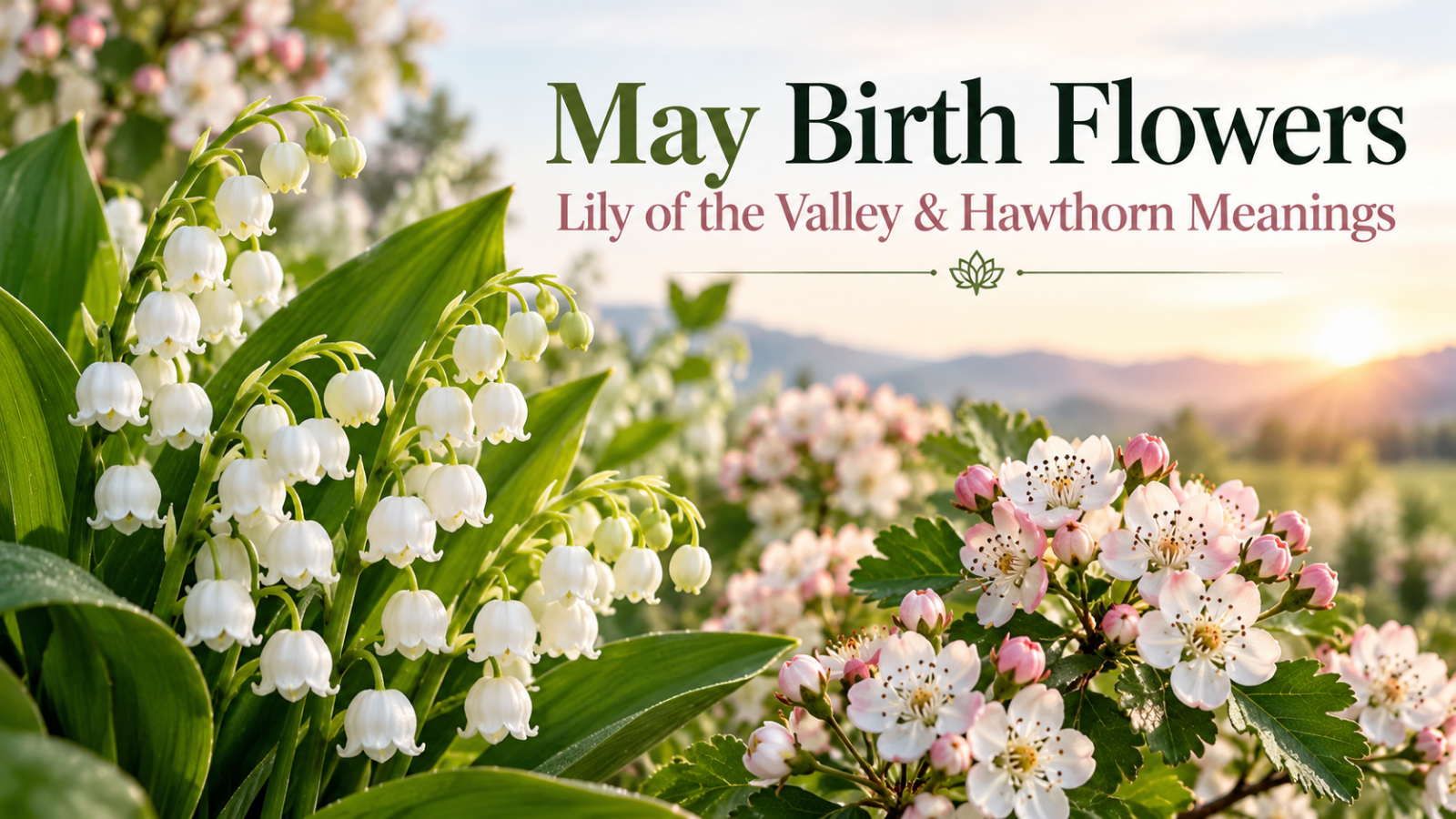 Meaning & Symbolism
May Birth Flowers: Lily of the Valley & Hawthorn Meanings
Discover the May birth flowers lily of the valley and hawthorn their meanings, symbolism, history, folklore, gifting ideas, personality traits, and safety facts.
Read the guide →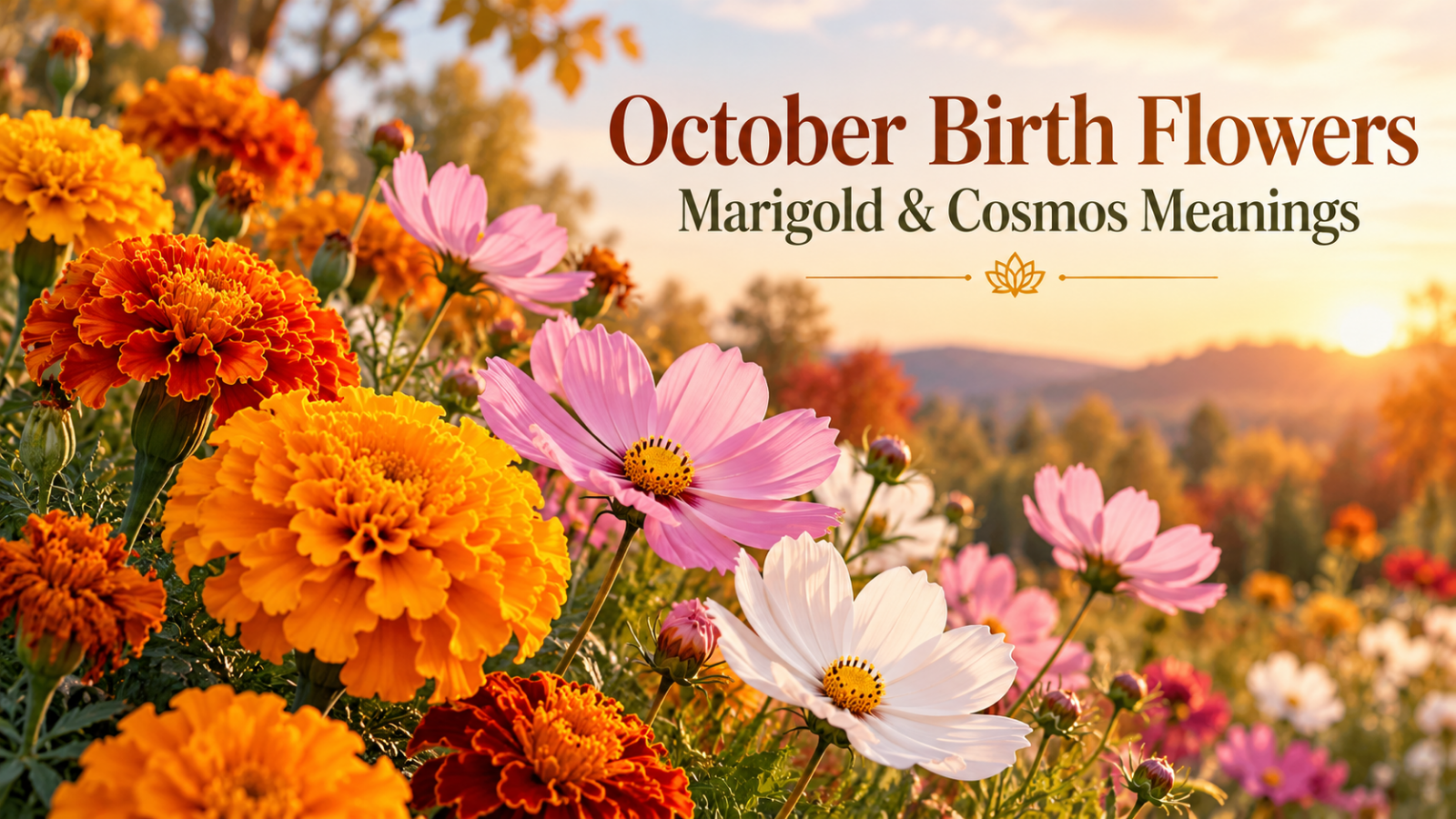 Meaning
October Birth Flowers: Marigold & Cosmos Meanings
Discover the October birth flowers—marigold and cosmos—their meanings, colors, symbolism, history, personality traits, gifting ideas, and cultural significance.
Read the guide →