Meaning & Symbolism
Valentine’s Day Flowers: 15 Flowers That Represent Love
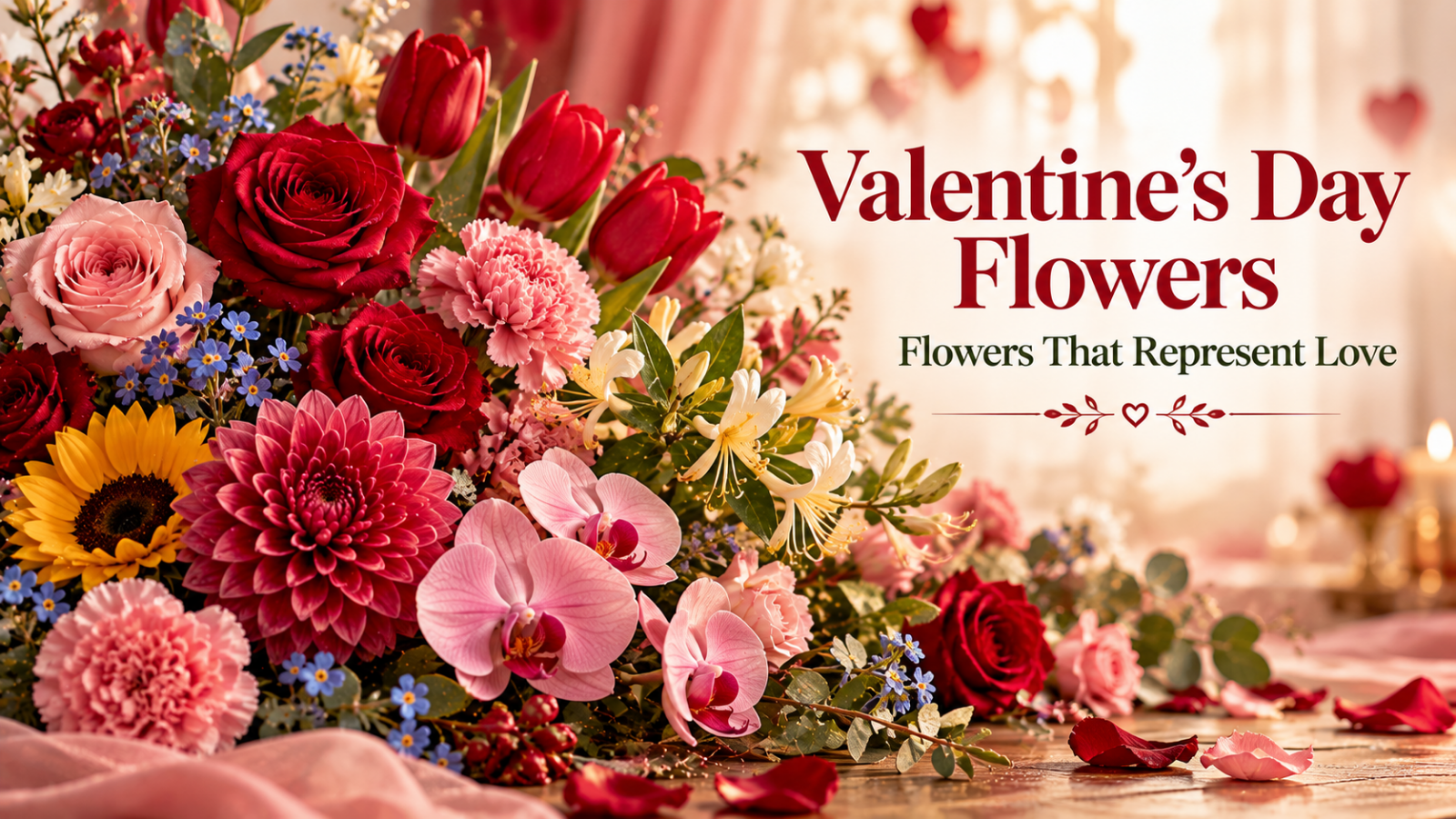
The best Valentine’s Day flowers depend on the kind of love you want to express.
Red roses remain the classic symbol of romantic love and passion, but they are far from your only option.
Red tulips can represent perfect love. Orchids express admiration, beauty, and refined affection. Dahlias symbolize commitment and lasting love, while carnations represent devotion and fascination.
And if you are buying for a friend, sibling, or family member rather than a romantic partner, flowers such as sunflowers, pink roses, yellow roses, and hydrangeas may communicate the message more naturally.
This guide explains the best flowers for Valentine’s Day, what each one symbolizes, and which flower to choose depending on your relationship.
What Flowers Represent Love?
Flowers associated with love include:
Red roses — passionate romantic love
Red tulips — perfect love
Pink roses — affection and admiration
Orchids — beauty, admiration, refined love
Dahlias — commitment and lasting love
Carnations — devotion and fascination
Peonies — romance and happy relationships
Red asters — deep, enduring affection
Forget-me-nots — remembrance and lasting love
Honeysuckle — devotion and emotional bonds
Sunflowers — loyalty and lasting friendship
Hydrangeas — heartfelt emotion and close bonds
Pink chrysanthemums — affection
Red chrysanthemums — romantic love
Lavender roses — enchantment and fascination
Floraly similarly lists roses, tulips, dahlias, asters, heliotropes, forget-me-nots, honeysuckle, sunflowers, carnations, hydrangeas, and chrysanthemums among flowers that can express different forms of love.
Best Valentine’s Day Flowers at a Glance| Flower | Main Meaning | Best For |
|---|---|---|
| Red Rose | Passionate love | Serious romantic partner |
| Pink Rose | Admiration, affection | Partner, friend, family |
| Red Tulip | Perfect love | Romantic alternative to roses |
| Orchid | Beauty, admiration | Sophisticated romantic gift |
| Dahlia | Commitment | Long-term relationship |
| Peony | Romance, prosperity | Partner, engagement |
| Carnation | Devotion | Romantic or family love |
| Red Aster | Enduring devotion | Long-term partner |
| Forget-Me-Not | Lasting love | Meaningful sentimental gift |
| Honeysuckle | Devotion | Long-term affection |
| Sunflower | Loyalty, happiness | Friend or partner |
| Hydrangea | Heartfelt emotion | Family or close friend |
| Pink Chrysanthemum | Affection | Family or friendship |
| Lavender Rose | Enchantment | New romance |
| White Rose | Sincere love | Elegant romantic gift |
No flower is more closely associated with Valentine’s Day than the red rose.
Red roses symbolize:
Romantic love
Passion
Desire
Devotion
Attraction
Floraly describes red roses as the ultimate symbol of Valentine’s Day, romance, and true love.
Red roses work best when the relationship is clearly romantic.
They are especially appropriate for:
Wife
Husband
Girlfriend
Boyfriend
Fiancé
Long-term partner
A red rose sends a direct message:
“I love you.”
What Does One Red Rose Mean?
One red rose can symbolize:
You are the one
Love at first sight
Singular devotion
What Do 12 Red Roses Mean?
A dozen red roses traditionally communicates:
Complete romantic love.
For more detail on rose colors and numbers, read our Rose Flower Meaning guide.
2. Pink Roses — Affection, Admiration, and Gentle LovePink roses are more flexible than red roses.
They symbolize:
Admiration
Appreciation
Affection
Gratitude
Gentle romance
Floraly highlights pink roses as suitable for both romantic and platonic love.
That makes them ideal for:
New relationships
Friends
Sisters
Mothers
Partners who prefer softer romantic gestures
Light Pink Roses
Represent:
Gentleness
Sweet affection
Admiration
Dark Pink Roses
Represent:
Gratitude
Appreciation
Recognition
Pink roses are one of the safest Valentine’s options when you want warmth without overwhelming intensity.
3. Red Tulips — Perfect LoveRed tulips are one of the strongest alternatives to red roses.
They symbolize:
Perfect love
Romance
Passion
Commitment
Floraly specifically describes red tulips as symbols of romance and passion.
Tulips feel:
Cleaner
Simpler
More modern
Less predictable
than traditional roses.
They work especially well for someone who loves minimalist or elegant flowers.
A bouquet of red tulips can communicate:
“My love for you feels complete.”
4. Orchids — Beauty, Admiration, and Refined LoveOrchids symbolize:
Beauty
Admiration
Luxury
Refinement
Rare affection
Love
An orchid is ideal when you want your Valentine’s gift to feel sophisticated rather than traditional.
Pink and red orchids feel romantic.
Purple orchids communicate admiration.
White orchids express elegant, sincere affection.
Floraly recommends orchids as a longer-lasting Valentine’s gift because a well-cared-for orchid plant can rebloom.
For complete symbolism, read our Orchid Flower Meaning guide.
5. Dahlias — Commitment and Lasting LoveDahlias symbolize:
Commitment
Devotion
Inner strength
Lasting love
Dignity
Floraly highlights dahlias as symbols of eternal love and commitment, making them especially suitable for long-term relationships.
Choose dahlias when you want to say:
“My feelings are serious and enduring.”
They work especially well for:
Spouse
Fiancé
Long-term partner
Anniversary-style Valentine’s gifts
For deeper symbolism, see our Dahlia Flower Meaning guide.
6. Peonies — Romance, Prosperity, and Happy LovePeonies symbolize:
Romance
Happy marriage
Prosperity
Good fortune
Affection
They are especially suitable for Valentine’s Day when the relationship feels serious or future-oriented.
Pink peonies are among the most romantic choices.
Red peonies feel more passionate.
White peonies can represent sincerity.
Peonies are particularly meaningful for:
Fiancé
Wife or husband
Long-term partner
Someone you hope to build a future with
Carnations symbolize:
Love
Devotion
Fascination
Affection
Admiration
Floraly includes carnations among the strongest alternatives to roses for Valentine’s Day.
Red Carnations
Represent:
Deep love
Affection
Admiration
Pink Carnations
Represent:
Gratitude
Appreciation
Maternal love
Yellow Carnations
Traditionally, yellow carnations can symbolize:
Rejection
Disappointment
Floraly specifically warns against yellow carnations for romantic Valentine’s gifts because of this traditional meaning.
8. Red Asters — Enduring LoveRed asters symbolize:
Deep affection
Commitment
Devotion
Lasting love
Floraly describes red asters as representing undying love and devotion.
Asters are especially meaningful if you want something less obvious than roses.
They say:
“My feelings have lasted.”
For more, see our Aster Flower Meaning guide.
9. Forget-Me-Nots — Lasting Love and RemembranceForget-me-nots symbolize:
Lasting affection
Remembrance
Faithfulness
Emotional connection
Floraly connects forget-me-nots with everlasting love and the idea of keeping someone forever in your thoughts.
These small flowers are especially meaningful when:
You have been together a long time
You are in a long-distance relationship
The gift is more sentimental than dramatic
A forget-me-not says:
“You remain in my heart.”
10. Honeysuckle — Devotion and Strong BondsHoneysuckle symbolizes:
Devotion
Affection
Lasting bonds
Sweetness
Its climbing growth habit makes it an intuitive symbol of two lives becoming intertwined.
Floraly describes honeysuckle as representing burning love, devotion, and affection.
Honeysuckle is a particularly meaningful choice for:
Married couples
Long-term partners
Anniversary-style Valentine’s gifts
Lavender roses symbolize:
Enchantment
Fascination
Admiration
Love at first sight
They are excellent flowers for:
New relationships
Crushes
Early romance
Someone who feels extraordinary
They carry a more mysterious romantic tone than red roses.
A lavender rose can communicate:
“You completely fascinate me.”
12. White Roses — Sincere and Pure LoveWhite roses symbolize:
Purity
Sincerity
Commitment
New beginnings
Respect
They are especially suitable for:
Engaged couples
Newlyweds
Serious relationships
Elegant Valentine’s arrangements
White roses feel romantic without being as intensely passionate as red roses.
13. Sunflowers — Loyalty and Happy LoveSunflowers are not traditionally thought of as Valentine’s flowers, but they can be excellent gifts for relationships based on friendship and happiness.
They symbolize:
Loyalty
Happiness
Positivity
Admiration
Longevity
Floraly specifically recommends sunflowers for friendship and long-lasting loyalty.
Sunflowers are particularly good for:
Best friends
Platonic Valentine’s gifts
Cheerful partners
Someone who dislikes traditional romantic flowers
Hydrangeas symbolize:
Heartfelt emotion
Gratitude
Close relationships
Family bonds
Floraly describes hydrangeas as especially suitable for expressing love between close friends and family.
They make excellent Valentine’s flowers for:
Mother
Sister
Best friend
Family member
Chrysanthemum meaning varies strongly by color and culture.
Red Chrysanthemums
Represent:
Romantic love
Passion
Pink Chrysanthemums
Represent:
Affection
Friendship
Appreciation
Yellow Chrysanthemums
Modern interpretations often emphasize:
Joy
Friendship
Happiness
But older flower-language traditions sometimes associated yellow chrysanthemums with slighted love. Floraly notes this historical meaning.
That makes pink or red chrysanthemums safer choices for Valentine’s Day.
Best Valentine’s Flowers for a GirlfriendFor a girlfriend, strong options include:
Red roses — classic romance.
Pink roses — sweet affection.
Red tulips — perfect love.
Orchids — admiration and elegance.
Peonies — romance and good fortune.
Lavender roses — fascination.
For a newer relationship, pink or lavender can feel less intense than deep red.
Best Valentine’s Flowers for a WifeFor a wife, choose flowers associated with lasting commitment.
Strong options include:
Red roses
Dahlias
Peonies
Orchids
Honeysuckle-inspired arrangements
Red asters
Dahlias are particularly meaningful because they emphasize commitment, not just attraction.
Best Valentine’s Flowers for a Boyfriend or HusbandFlowers are not gender-specific gifts.
For a boyfriend or husband, you can choose arrangements based on personality rather than outdated assumptions.
Good choices include:
Red roses
Orchids
Sunflowers
Tulips
Dahlias
Deep red or burgundy arrangements
A clean, architectural orchid or tulip arrangement can feel especially modern.
Best Flowers for a New RelationshipIf the relationship is new, overly intense flowers can sometimes send a stronger message than intended.
Good options include:
Pink roses
Lavender roses
Pink tulips
Orchids
Pink carnations
These communicate interest and admiration without immediately implying lifelong devotion.
Best Flowers for a Long-Term RelationshipFor a serious or established relationship, choose flowers that symbolize commitment.
Best options include:
Dahlias
Red roses
Red asters
Honeysuckle
Peonies
Orchids
These carry deeper meanings related to:
Devotion
Faithfulness
Commitment
Lasting affection
Valentine’s Day does not have to be exclusively romantic.
For friendship, choose:
Yellow roses
Sunflowers
Pink roses
Pink chrysanthemums
Gerbera daisies
These communicate:
Joy
Friendship
Appreciation
Loyalty
For a mother, sister, aunt, or other family member, choose flowers centered on affection rather than passion.
Good choices include:
Pink carnations
Pink roses
Hydrangeas
Sunflowers
Orchids
Pink carnations are especially associated with maternal affection.
Valentine’s Day Flowers by Meaning“I Love You”
Choose:
Red roses
Red tulips
Red carnations
“I’m Committed to You”
Choose:
Dahlias
Honeysuckle
Red asters
“You Fascinate Me”
Choose:
Lavender roses
Orchids
“I Appreciate You”
Choose:
Pink roses
Pink carnations
Orchids
“You’re My Best Friend”
Choose:
Yellow roses
Sunflowers
Pink chrysanthemums
“I Want a Future With You”
Choose:
Peonies
White roses
Dahlias
Color can sometimes communicate more clearly than the flower itself.
| Flower Color | Common Valentine Meaning |
|---|---|
| Red | Passion, romance, desire |
| Pink | Affection, appreciation |
| White | Sincerity, purity, commitment |
| Yellow | Friendship, happiness |
| Purple/Lavender | Fascination, admiration |
| Orange | Attraction, excitement |
Floraly’s broader floriography guide similarly associates red with passion, pink with love and happiness, white with purity, yellow with friendship, and violet tones with elegance and refinement.
Flowers to Avoid for Valentine’s DayNot every flower carries a positive romantic meaning.
Yellow Carnations
Traditionally symbolize:
Rejection
Disappointment
Yellow Chrysanthemums
Older traditions may associate them with:
Neglected love
Slighted affection
Black Roses
Often symbolize:
Farewell
Loss
Mystery
Endings
Daffodils
Daffodils have positive modern meanings such as hope and renewal, but Victorian flower language sometimes associated them with unrequited love.
For a full explanation, read our Daffodil Flower Meaning guide.
Are Lilies Good Valentine’s Day Flowers?Red and pink lilies can symbolize:
Passion
Love
Admiration
Floraly includes red lilies among its romantic Valentine’s alternatives.
However, there is an important safety consideration:
True lilies and daylilies are extremely dangerous to cats.
If the recipient owns a cat, choose another flower.
Our Flowers Poisonous to Pets guide explains the risk in detail.
Best Pet-Friendlier Valentine’s FlowersIf the recipient has cats or dogs, good options can include:
Roses
Phalaenopsis orchids
Gerbera daisies
Sunflowers
Snapdragons
Even non-toxic flowers should still be kept away from pets because commercial arrangements may contain pesticides, preservatives, or other irritating materials.
Roses vs. Tulips for Valentine’s DayChoose roses if you want:
Classic romance
Strong passion
A traditional Valentine message
Choose tulips if you want:
Elegant simplicity
Perfect-love symbolism
A more modern-looking bouquet
Red tulips are one of the strongest alternatives to roses.
Roses vs. Orchids for Valentine’s DayChoose roses when you want direct romance.
Choose orchids when you want:
Sophistication
Admiration
Long-lasting beauty
A living plant rather than a short-lived bouquet
An orchid plant can become a continuing reminder of the relationship.
Roses vs. Dahlias for Valentine’s DayChoose red roses for passion.
Choose dahlias for commitment.
This distinction makes dahlias especially meaningful in established relationships.
Best Valentine’s Day Bouquet CombinationsClassic Romance
Red roses
White roses
Eucalyptus
Meaning:
Passion + sincerity
Soft Romance
Pink roses
Pink carnations
White flowers
Meaning:
Affection + gratitude + sincerity
Lasting Love
Dahlias
Red asters
Roses
Meaning:
Commitment + devotion + passion
Friendship Valentine
Sunflowers
Yellow roses
Gerbera daisies
Meaning:
Joy + friendship + loyalty
Elegant Romance
Orchids
White roses
Soft greenery
Meaning:
Admiration + elegance + sincere love
How Many Flowers Should You Give on Valentine’s Day?There is no requirement.
Meaning matters more than size.
One carefully chosen flower can feel more personal than a giant bouquet.
For roses, traditional number symbolism includes:
1 rose: you are the one.
3 roses: I love you.
12 roses: complete love.
24 roses: always on my mind.
For complete rose-number meanings, see our Rose Flower Meaning guide.
How to Choose Valentine’s Flowers Based on Relationship StageCrush
Choose:
Lavender roses
Pink tulips
Orchids
Avoid an extremely dramatic bouquet unless you already know the feeling is mutual.
New Relationship
Choose:
Pink roses
Red tulips
Pink carnations
Orchids
Serious Relationship
Choose:
Red roses
Dahlias
Peonies
Asters
Marriage
Choose:
Red roses
Dahlias
Peonies
Orchids
Flowers connected to an anniversary or shared memory
Personal meaning becomes more valuable than simply choosing the most expensive bouquet.
Should You Choose Flowers Based on Meaning or Preference?Meaning is useful, but the recipient’s actual preference should come first.
If your partner loves yellow tulips, do not avoid them because an old flower dictionary gives yellow another interpretation.
The best hierarchy is:
Their favorite flower
Their favorite color
Personal memories
Symbolic meaning
Flower symbolism should improve the gift—not override what the recipient actually enjoys.
Frequently Asked Questions About Valentine’s Day FlowersWhat is the best flower for Valentine’s Day?
Red roses remain the classic choice because they symbolize romantic love and passion.
What flowers mean true love?
Red roses, red tulips, dahlias, red asters, honeysuckle, and forget-me-nots can all express different forms of lasting or romantic love.
What flower symbolizes eternal love?
Dahlias, red asters, forget-me-nots, and honeysuckle are commonly associated with long-lasting devotion.
What flowers mean perfect love?
Red tulips are especially associated with perfect love.
What flower means devotion?
Dahlias, carnations, honeysuckle, asters, and orchids can all communicate devotion depending on context.
What flowers are better than roses for Valentine’s Day?
Popular alternatives include:
Red tulips
Orchids
Dahlias
Peonies
Carnations
Red asters
What Valentine’s flowers are good for a new relationship?
Pink roses, lavender roses, orchids, and tulips are excellent because they communicate affection without overwhelming intensity.
What flowers should I give my wife?
Red roses, dahlias, peonies, orchids, and asters are strong choices for an established relationship.
What flowers should I give my girlfriend?
Red or pink roses, tulips, orchids, peonies, and carnations all work well.
Can men receive Valentine’s Day flowers?
Absolutely. Flowers are not gender-specific. Choose based on the recipient’s style and preferences.
What flowers represent friendship on Valentine’s Day?
Yellow roses, sunflowers, pink roses, and pink chrysanthemums are strong friendship choices.
Are lilies safe for cat owners?
True lilies and daylilies are extremely dangerous to cats, so avoid sending them to cat-owning households.
Do yellow roses mean jealousy?
Historically, yellow roses sometimes carried meanings such as jealousy. Modern symbolism overwhelmingly emphasizes friendship, happiness, and warmth.
What flower means love at first sight?
Lavender roses are commonly associated with enchantment and love at first sight.
What flower means commitment?
Dahlias are one of the strongest flowers for commitment and lasting love.
Final Thoughts: Which Valentine’s Day Flowers Should You Choose?The best Valentine’s Day flowers depend on the message you want to send.
For classic romance:
Choose red roses.
For perfect love:
Choose red tulips.
For lasting commitment:
Choose dahlias.
For elegance and admiration:
Choose orchids.
For romance and future happiness:
Choose peonies.
For friendship:
Choose sunflowers or yellow roses.
For devotion:
Choose red asters, honeysuckle, or forget-me-nots.
The most important thing, however, is not following flower symbolism perfectly.
It is choosing something that feels personal to the recipient.
A meaningful bouquet says more than:
“Happy Valentine’s Day.”
It says:
“I know who you are, I know what you love, and I chose this specifically for you.”
For deeper flower symbolism, explore our Rose Flower Meaning, Orchid Flower Meaning, Dahlia Flower Meaning, Aster Flower Meaning, and Flowers Poisonous to Pets guides.
Keep reading
 Meaning & Symbolism
November Birth Flowers: Chrysanthemum & Peony Meanings
Discover the November birth flowers—chrysanthemum and peony—their meanings, colors, cultural symbolism, personality traits, tattoos, gifting ideas, and pet safety.
Read the guide → Science & uses
Flowers Poisonous to Pets: Toxic Flowers for Cats & Dogs
Learn which flowers are poisonous to cats and dogs, including lilies, tulips, daffodils, chrysanthemums and azaleas, plus symptoms, emergency steps and pet-safe alternatives.
Read the guide → Meaning & Symbolism
February Birth Flowers: Violet & Primrose Meanings
Discover the February birth flowers—violet and primrose—their meanings, colors, spiritual symbolism, personality traits, tattoos, mythology, gifting ideas, and more.
Read the guide →