Science & uses
Flowers Poisonous to Pets: Toxic Flowers for Cats & Dogs
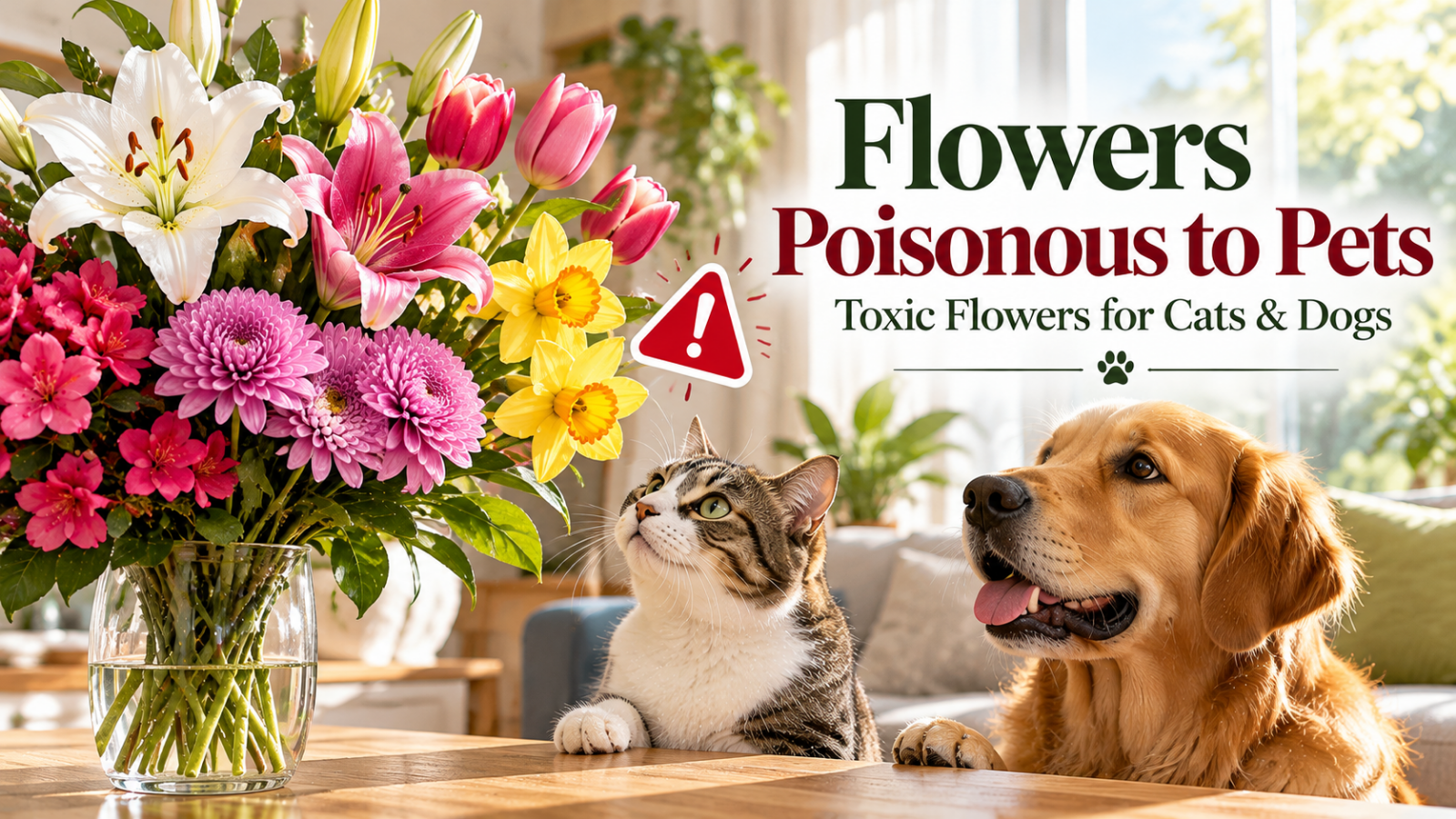
Flowers can brighten a home, but some popular blooms can cause serious illness in cats and dogs.
The most important example is the true lily. Lilies in the Lilium genus and daylilies in Hemerocallis can cause acute kidney failure in cats, and exposure to even small amounts of petals, leaves, pollen, or vase water should be treated as an emergency.
Other flowers—including daffodils, tulips, lily of the valley, azaleas, chrysanthemums, gladiolus, and amaryllis—can also cause poisoning, although the type and severity of toxicity vary considerably.
If you suspect your pet has eaten a toxic flower, contact a veterinarian or animal poison-control service promptly rather than waiting for symptoms to appear.
Quick Guide: Flowers That Can Be Toxic to Pets
| Flower | Cats | Dogs | Main Concern |
|---|---|---|---|
| True lilies/daylilies | Extremely dangerous | Usually less severe | Acute kidney failure in cats |
| Lily of the valley | Toxic | Toxic | Heart rhythm abnormalities |
| Daffodils/Narcissus | Toxic | Toxic | Vomiting; bulbs especially concerning |
| Tulips | Toxic | Toxic | Oral/GI irritation; bulbs most concentrated |
| Hyacinths | Toxic | Toxic | Oral/GI irritation; bulbs higher risk |
| Chrysanthemums | Toxic | Toxic | Vomiting, diarrhea, drooling, skin irritation |
| Azaleas/Rhododendrons | Toxic | Toxic | GI, heart and neurologic effects |
| Gladiolus | Toxic | Toxic | GI upset; bulbs/corms may pose greater risk |
| Amaryllis | Toxic | Toxic | Vomiting, drooling, abdominal discomfort |
| Lily of the valley | Highly concerning | Highly concerning | Cardiac glycosides |
| Dahlia | Toxic/mild | Toxic/mild | GI upset, skin irritation |
| Peony | Toxic | Toxic | GI upset |
This is not a complete list. Plant toxicity depends on the exact species, plant part, quantity eaten, and the animal involved.
Which Flowers Are Most Dangerous to Cats?
1. True Lilies and Daylilies
If you have a cat, true lilies are the most important flowers on this list to avoid entirely.
Dangerous examples include:
Easter lily
Tiger lily
Asiatic lily
Oriental lily
Stargazer lily
Japanese show lily
Daylily
Pet Poison Helpline states that every part of true lilies in the Lilium genus can be toxic to cats, including:
Flowers
Leaves
Stems
Pollen
Roots/rhizomes
Vase water
Even very small exposures can result in acute kidney failure.
Why Lily Pollen Is Dangerous to Cats
A cat does not necessarily have to chew an entire lily.
Pollen can fall onto the animal's coat. When the cat grooms itself, it may swallow that pollen.
Even drinking water from a vase containing a true lily can be dangerous.
Signs of Lily Poisoning in Cats
Early symptoms may include:
Vomiting
Drooling
Loss of appetite
Lethargy
Dehydration
Kidney injury can follow.
Do not wait for kidney symptoms to appear. Any suspected true-lily exposure in a cat warrants urgent veterinary attention.
Important: Not Every “Lily” Has the Same Toxicity
Common names can be confusing.
True Lilies
Lilium species can cause kidney failure in cats.
Daylilies
Hemerocallis species are similarly dangerous to cats.
Lily of the Valley
Lily of the valley is not a true lily. It contains cardiac glycosides and can cause dangerous heart rhythm abnormalities in both cats and dogs.
Calla Lily and Peace Lily
These are also not true lilies.
They contain insoluble calcium oxalate crystals, which generally cause:
Mouth irritation
Drooling
Pawing at the mouth
Vomiting
They do not cause the same kidney-failure syndrome seen with true lilies.
Peruvian Lily
Alstroemeria, often called Peruvian lily, is not a true lily either. It may cause gastrointestinal irritation but is not expected to cause the severe kidney toxicity associated with Lilium.
Are Tulips Poisonous to Cats and Dogs?
Yes.
Tulips contain compounds capable of causing irritation and gastrointestinal illness.
The highest concentrations are generally found in the bulbs, which is particularly important for dogs that may dig them up.
Possible symptoms include:
Drooling
Vomiting
Diarrhea
Mouth irritation
Reduced appetite
Pet Poison Helpline specifically notes that tulip bulbs contain higher concentrations of their toxic compounds.
Tulips are toxic, but their typical toxicity should not be equated with the kidney-failure risk of true lilies in cats.
Are Daffodils Poisonous to Pets?
Yes.
Daffodils belong to the genus Narcissus and contain lycorine, an alkaloid capable of triggering vomiting.
The bulbs contain particularly concentrated irritating compounds.
Possible symptoms include:
Vomiting
Diarrhea
Abdominal pain
Drooling
Large exposures, particularly involving bulbs, can occasionally cause more serious problems such as heart rhythm abnormalities or respiratory effects.
For more information about the flower itself, see our Daffodil Flower Meaning guide.
Is Lily of the Valley Poisonous to Cats and Dogs?
Yes, and it can be dangerous.
Lily of the valley (Convallaria majalis) contains cardenolides, compounds that affect the heart.
Possible signs include:
Vomiting
Abnormal heartbeat
Low blood pressure
Disorientation
Seizures
Collapse or coma in severe cases
The ASPCA lists lily of the valley as toxic to dogs, cats, and horses.
This plant should be kept well away from pets.
Are Chrysanthemums Poisonous to Pets?
Chrysanthemums can be toxic to both cats and dogs.
Possible signs include:
Vomiting
Diarrhea
Drooling
Skin irritation
Loss of coordination
They contain several compounds capable of causing irritation.
If a pet repeatedly chews chrysanthemums, do not assume that mild symptoms mean future exposure is safe.
Are Azaleas and Rhododendrons Poisonous to Pets?
Yes.
Azaleas and rhododendrons contain grayanotoxins.
Even relatively small amounts may cause:
Vomiting
Diarrhea
Excessive drooling
Larger exposures can affect the heart and nervous system. Pet Poison Helpline warns that ingestion may result in heart-rate/rhythm abnormalities and neurologic effects.
Are Hyacinths Poisonous to Cats and Dogs?
Yes.
Hyacinths contain irritating compounds, especially in their bulbs.
Possible symptoms include:
Drooling
Vomiting
Diarrhea
Oral irritation
Bulb ingestion is generally a greater concern than incidental contact with the flower itself.
Are Amaryllis Poisonous to Pets?
Yes.
Amaryllis can cause:
Vomiting
Drooling
Abdominal pain
Diarrhea
Reduced appetite
The bulb is usually the most concerning plant part.
If your dog digs up flower bulbs in the garden, take special care around amaryllis, daffodils, tulips, and hyacinths.
Are Gladiolus Poisonous to Cats and Dogs?
Yes.
Gladiolus appears on the ASPCA toxic-plant list for cats, and ingestion can also affect dogs.
Possible symptoms may include gastrointestinal irritation.
The underground corm is typically of greater concern than petals.
For more about the flower, see our Gladiolus Flower Meaning guide.
Are Dahlias Poisonous to Pets?
Dahlias may cause mild toxicity in dogs and cats.
Possible signs include:
Vomiting
Diarrhea
Skin irritation
This is generally less severe than true-lily poisoning, but the plant should still be kept away from pets that chew flowers.
Read our Dahlia Flower Meaning guide for more about dahlias.
Are Peonies Poisonous to Dogs and Cats?
Peonies are considered toxic to dogs and cats.
Ingestion may cause gastrointestinal signs such as:
Vomiting
Diarrhea
Stomach upset
A curious pet should therefore not have free access to peony arrangements or garden plants.
Toxic Flowers for Cats vs. Dogs: Why the Difference MattersA major mistake in many general flower-safety articles is treating toxicity as identical across species.
It is not.
A flower can be:
Extremely dangerous to cats
Mildly irritating to dogs
Toxic only in large quantities
More dangerous in its bulb than its petals
True lilies demonstrate this perfectly.
Pet Poison Helpline states that true lilies and daylilies can cause acute kidney failure in cats, whereas dogs that ingest true lilies typically experience gastrointestinal upset rather than the same renal syndrome.
For this reason, always check plant toxicity for the specific pet species involved.
What Are the Signs of Flower Poisoning in Pets?Symptoms vary according to the plant.
Common signs may include:
Drooling
Vomiting
Diarrhea
Loss of appetite
Lethargy
Mouth irritation
Pawing at the mouth
Weakness
Tremors
Loss of coordination
More serious poisoning may cause:
Abnormal heart rhythm
Difficulty breathing
Seizures
Kidney injury
Liver injury
Collapse
The absence of immediate symptoms does not necessarily mean the exposure was harmless.
Some poisonings develop over time.
What Should You Do if Your Pet Eats a Toxic Flower?
If you know or suspect that your pet has eaten a potentially poisonous plant:
1. Remove Access to the Plant
Move the bouquet or plant away so the animal cannot eat more.
2. Identify the Flower
If possible, find:
The flower name
Plant label
Bouquet ingredient list
Photo of the plant
Do not rely entirely on common names.
3. Contact a Veterinarian Promptly
Tell them:
Your pet's species
Approximate weight
What flower was involved
Which part was eaten
Approximate amount
When exposure happened
Any symptoms already present
4. Keep a Sample or Take Photos
This can help a veterinarian identify the plant.
5. Follow Professional Instructions
Treatment depends heavily on the flower and animal.
Do not induce vomiting or give home remedies unless a veterinarian or veterinary poison specialist specifically tells you to do so.
For true-lily exposure in a cat, seek veterinary help immediately even if the cat still appears normal.
Can Vase Water Be Toxic to Pets?Yes, depending on the flower.
This is especially important with true lilies.
A cat drinking water from a vase containing a Lilium or daylily can potentially be exposed to dangerous toxins.
Vase water can also contain:
Plant material
Flower preservatives
Bacteria
Pesticide residues
For this reason, do not allow pets to drink from flower vases even when the flowers themselves are considered relatively safe.
Are Dried Flowers Safe for Pets?Drying a toxic flower does not automatically make it safe.
Many toxic plant compounds can remain after drying.
Keep dried arrangements containing potentially toxic species away from pets.
If you are preserving flowers at home, see our guide to How to Dry Flowers Quickly.
Pet-Safe Flowers for Cats and DogsThere are many safer alternatives when choosing flowers for homes with pets.
Common options include:
Roses
Sunflowers
Snapdragons
Gerbera daisies
Phalaenopsis orchids
Zinnias
The ASPCA and Pet Poison Helpline distinguish several of these from plants capable of serious systemic poisoning, although any plant material can still cause stomach upset if a pet eats enough of it.
Roses
Roses are generally considered non-toxic to cats and dogs.
However, rose stems have prickles that can cause physical injuries.
Also remember that commercial bouquets may have pesticide or preservative residues.
For symbolism, read our Rose Flower Meaning guide.
Sunflowers
Sunflowers are generally considered a pet-friendly floral choice.
They make an excellent alternative to toxic yellow flowers such as daffodils.
Phalaenopsis Orchids
Moth orchids are widely regarded as non-toxic to cats and dogs.
That makes them one of the better long-lasting houseplant gifts for a pet-owning household.
Read our Orchid Flower Meaning article for more.
Gerbera Daisies
Gerbera daisies are generally considered pet-friendly and make excellent colorful bouquet flowers.
This is different from chrysanthemums, which are sometimes casually called mums or daisies and are toxic.
For daisy symbolism, explore our Daisy Flower Meaning guide.
Snapdragons
Snapdragons are another commonly recommended pet-safe cut flower.
They provide strong vertical color without the toxicity concerns associated with larkspur or delphinium.
Pet-Safe Flowers at a Glance| Safer Flower | Cats | Dogs |
|---|---|---|
| Rose | Generally non-toxic | Generally non-toxic |
| Sunflower | Generally non-toxic | Generally non-toxic |
| Phalaenopsis orchid | Generally non-toxic | Generally non-toxic |
| Gerbera daisy | Generally non-toxic | Generally non-toxic |
| Snapdragon | Generally non-toxic | Generally non-toxic |
| Zinnia | Generally non-toxic | Generally non-toxic |
“Non-toxic” does not mean a pet should eat the flower.
Any plant can potentially cause gastrointestinal upset through physical irritation, and commercial flowers may contain pesticide or fungicide residues. ASPCA specifically notes that even non-toxic plants can cause mild stomach upset when pets eat them.
Flowers That Cat Owners Should Avoid Most CarefullyIf you own a cat, prioritize avoiding:
True lilies and daylilies
Lily of the valley
Azaleas/rhododendrons
Daffodils
Tulip bulbs
Amaryllis
True lilies deserve special emphasis because their toxicity is exceptionally severe in cats.
A single bouquet containing hidden lily stems can create a major risk.
Flowers Dog Owners Should Be Careful WithCommon flowers and flowering plants of concern for dogs include:
Daffodils
Tulips
Hyacinths
Lily of the valley
Azaleas
Amaryllis
Chrysanthemums
Gladiolus
Peonies
Dogs that dig are especially vulnerable to toxic bulbs because bulbs often contain higher concentrations of toxic compounds.
How to Make a Home With Pets Safer Around FlowersKnow What Is in the Bouquet
Mixed bouquets can contain several species.
If the florist cannot identify every stem, be cautious—especially in a home with cats.
Avoid True Lilies Completely in Cat Homes
Putting them “somewhere high” is not enough.
Pollen can fall, petals can drop, and cats can reach unexpected places.
For cat households, the safest approach is simply no true lilies or daylilies indoors.
Keep Bulbs Locked Away
Stored bulbs can attract dogs that like digging or chewing.
Keep tulip, daffodil, hyacinth, and amaryllis bulbs inaccessible.
Prevent Pets From Drinking Vase Water
Use heavy, stable vases and place them out of reach.
Clean Fallen Petals and Pollen Quickly
This is especially important if you unexpectedly discover a lily in a mixed bouquet.
Research Before Gifting Flowers
If the recipient has pets, choose pet-friendlier varieties rather than forcing them to find somewhere inaccessible to display the bouquet.
Are Flowers From a Florist Safe if the Plant Is Non-Toxic?Not necessarily safe to eat.
A flower can be botanically non-toxic but still carry:
Pesticides
Fungicides
Preservatives
Fertilizer residues
Commercial ornamental flowers are grown for decoration, not pet consumption.
Therefore, even pet-safe flowers should be displayed where animals are unlikely to chew them.
Frequently Asked Questions About Flowers Poisonous to PetsWhat flowers are most poisonous to cats?
True lilies and daylilies are among the most dangerous flowers for cats because very small exposures can cause acute kidney failure.
Are lilies poisonous to dogs?
True lilies generally do not cause the same kidney-failure syndrome in dogs that they cause in cats, although dogs can still develop gastrointestinal upset. Other plants with “lily” in their common name may have different toxic effects.
Are tulips poisonous to cats?
Yes. Tulips can cause drooling, vomiting, diarrhea, and oral irritation. Bulbs contain higher concentrations of toxic compounds.
Are tulips poisonous to dogs?
Yes, particularly the bulbs.
Are daffodils poisonous to cats and dogs?
Yes. Daffodils contain lycorine and can cause vomiting and gastrointestinal symptoms. Bulb ingestion may produce more serious effects.
Are roses poisonous to cats?
Roses are generally considered non-toxic, although their prickles can injure pets and pesticide residues are another consideration.
Are orchids poisonous to cats?
Phalaenopsis orchids are generally considered a pet-friendly choice.
Are daisies poisonous to pets?
It depends on the flower being called a “daisy.” Gerbera daisies are generally considered non-toxic, while chrysanthemums—which may be described as daisy-like flowers—are toxic.
Always identify the exact plant.
Are chrysanthemums poisonous to cats?
Yes. They can cause gastrointestinal upset, drooling, skin irritation, and loss of coordination.
Is lily of the valley poisonous to dogs?
Yes. Its cardiac glycosides can cause dangerous heart rhythm abnormalities and neurologic symptoms.
Can lily pollen kill a cat?
True-lily pollen can create a potentially life-threatening exposure when a cat gets pollen on its fur and then swallows it while grooming. Immediate veterinary attention is recommended.
Can vase water poison cats?
Vase water from true lilies can be dangerous to cats. More generally, pets should not be allowed to drink flower water.
Should I make my dog vomit after eating a poisonous flower?
Do not induce vomiting unless a veterinarian or veterinary poison specialist specifically instructs you to do so.
What should I do if my cat touches a lily?
If pollen or plant material from a true lily may have contacted the cat, prevent grooming and contact a veterinarian immediately for specific instructions.
Can dried toxic flowers still harm pets?
Potentially, yes. Drying does not necessarily destroy the plant's toxins.
Final Thoughts: Which Flowers Are Poisonous to Pets?Many popular flowers can be poisonous to cats or dogs, but the level of danger varies enormously.
The most important rule for cat owners is:
Do not keep true lilies or daylilies in the home.
They can cause life-threatening kidney failure after very small exposures, including pollen and vase water.
Other flowers worth treating cautiously include:
Daffodils
Tulips
Hyacinths
Lily of the valley
Azaleas
Chrysanthemums
Amaryllis
Gladiolus
Fortunately, pet owners still have plenty of beautiful alternatives, including roses, sunflowers, Phalaenopsis orchids, Gerbera daisies, snapdragons, and zinnias.
When in doubt, identify the exact plant before bringing it into a pet-accessible home.
And if you suspect your pet has eaten a toxic flower, contact a veterinarian promptly rather than waiting for symptoms or attempting a home remedy.
For more LotusRush flower guides, explore our Rose Flower Meaning, Orchid Flower Meaning, Daffodil Flower Meaning, and Gladiolus Flower Meaning articles.
Keep reading
 Meaning & Symbolism
February Birth Flowers: Violet & Primrose Meanings
Discover the February birth flowers—violet and primrose—their meanings, colors, spiritual symbolism, personality traits, tattoos, mythology, gifting ideas, and more.
Read the guide → Growing
How to Dry Flowers Quickly: 6 Easy Methods That Work
Learn how to dry flowers quickly using a microwave, silica gel, oven, dehydrator, pressing, or air drying. Compare times and discover the best method for each flower.
Read the guide → Meaning & Symbolism
Aster Flower Meaning: Symbolism, Colors & Spiritual Significance
Discover the aster flower meaning, including love, wisdom, patience, color symbolism, spiritual meaning, September birth-flower significance, tattoos, mythology, and gifting.
Read the guide →