Meaning & Symbolism
May Birth Flowers: Lily of the Valley & Hawthorn Meanings
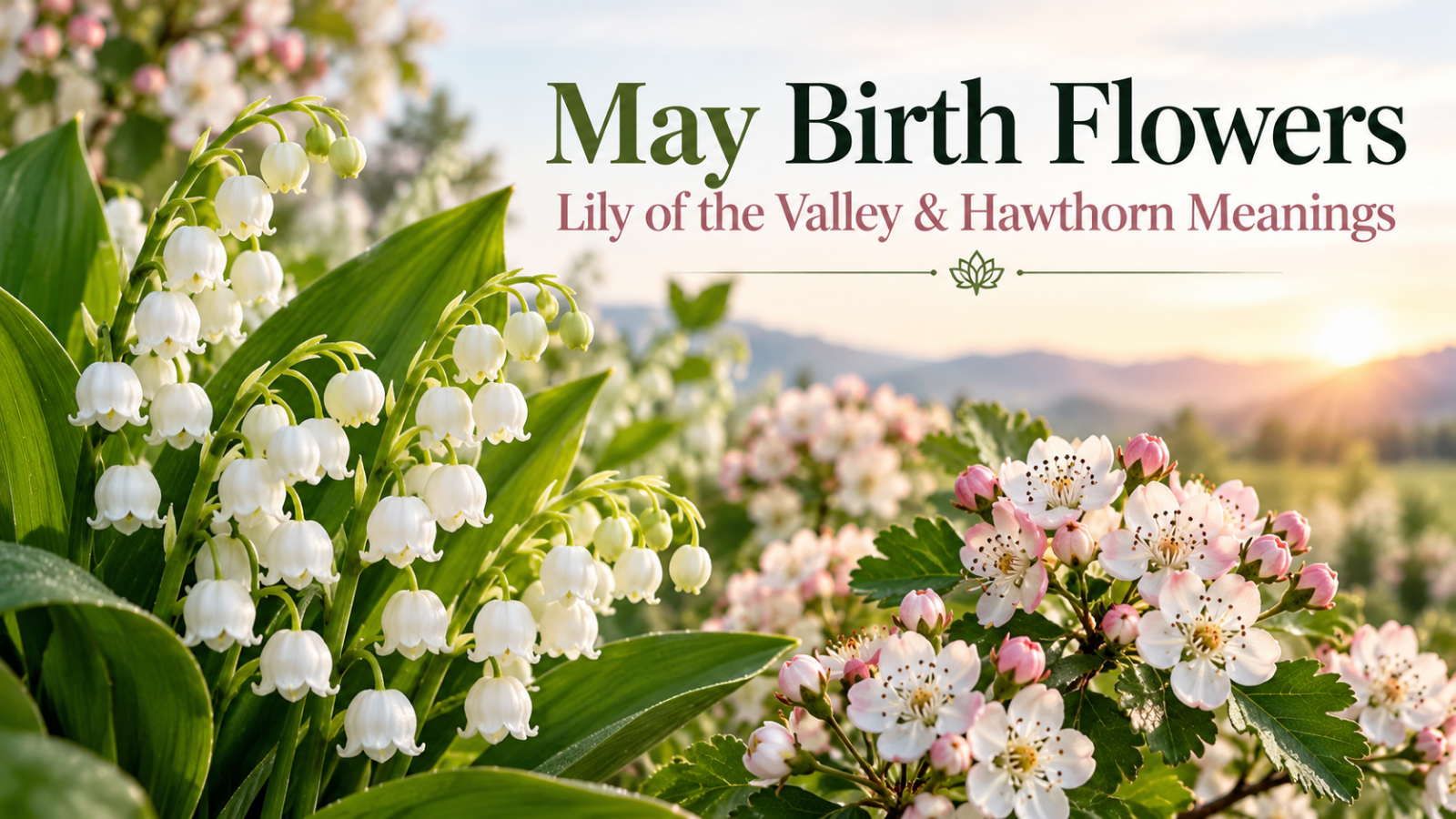
If you were born in May, your traditional birth flowers are lily of the valley and hawthorn.
Lily of the valley is commonly treated as May’s primary birth flower and symbolizes sweetness, purity, humility, good luck, and the return of happiness. Hawthorn is the month’s other traditional flower and is associated with hope, protection, love, happiness, fertility, and new beginnings.
Together, they capture two different sides of May. Lily of the valley is delicate, fragrant, and graceful. Hawthorn is stronger, thornier, and deeply rooted in European folklore.
What Is the May Birth Flower?
May is traditionally associated with two flowers:
| May Birth Flower | Main Meanings | Typical Appearance |
|---|---|---|
| Lily of the Valley | Happiness, purity, humility, sweetness, good luck | Small white bell-shaped flowers |
| Hawthorn | Hope, protection, love, fertility, happiness | Clusters of white or pink blossoms |
The Old Farmer’s Almanac also recognizes lily of the valley and hawthorn as May’s birth flowers, associating them with purity, hope, sweetness, and renewal.
Why Does May Have Two Birth Flowers?
Birth-flower traditions developed over time through different cultural, seasonal, and floral-language traditions rather than from one universal botanical authority.
That is why several months now have two commonly recognized flowers.
For May, both flowers make seasonal sense in the Northern Hemisphere.
Lily of the valley typically flowers in spring, while hawthorn is so closely linked to the month that it has long been known as the May tree or May flower in parts of Europe.
The pairing is also symbolically complementary.
Lily of the valley represents tenderness and returning happiness.
Hawthorn represents strength, hope, love, and protection.
May Birth Flower #1: Lily of the ValleyLily of the valley is one of the most recognizable spring flowers despite its small size.
Its arching stems carry tiny, downward-facing white bells surrounded by broad green leaves.
Its accepted botanical name is Convallaria majalis. It belongs to the Asparagaceae family rather than the true lily family, Liliaceae. Kew recognizes Convallaria majalis as an accepted perennial species native from Europe toward the Caucasus.
That means the name can be slightly misleading:
Lily of the valley is not a true lily.
Lily of the Valley Meaning
The most traditional meanings of lily of the valley include:
Return of happiness
Purity
Sweetness
Humility
Innocence
Good luck
Motherhood
Renewal
Of these, “return to happiness” is perhaps the flower’s most distinctive symbolic meaning.
This interpretation became especially popular through Victorian floriography, when flowers were used to communicate emotions and messages that might otherwise remain unspoken.
Giving someone lily of the valley can therefore express a simple but meaningful wish:
“May happiness return to you.”
Why Does Lily of the Valley Mean a Return to Happiness?
The meaning fits both the flower and the season.
Lily of the valley usually appears in spring after the cold and dormant months of winter.
Its small white bells emerge beneath fresh green leaves, creating an obvious image of renewal.
That seasonal return helped reinforce symbolism surrounding:
renewed happiness
fresh beginnings
emotional healing
optimism
hope after difficulty
This makes lily of the valley especially meaningful for someone starting a new chapter after a challenging period.
Lily of the Valley Spiritual Meaning
Spiritually, lily of the valley is most commonly associated with:
purity
humility
renewal
innocence
grace
faith
hope
Its white flowers naturally reinforce ideas of purity and spiritual cleanliness.
Christian traditions also developed legends connecting lily of the valley with the Virgin Mary.
One traditional story says the flowers appeared where Mary’s tears fell during the crucifixion of Jesus, leading to names such as Our Lady’s Tears.
Floraly also discusses this Christian association in its May birth-flower guide.
These stories are religious folklore rather than botanical history, but they help explain why lily of the valley became associated with grief transformed into hope.
Lily of the Valley in Weddings
Lily of the valley is one of the most famous wedding flowers.
Its white color supports traditional symbolism of:
purity
happiness
devotion
innocence
new beginnings
Its delicate size also works beautifully in smaller bridal bouquets.
Floraly notes that lily of the valley has appeared in notable bridal bouquets, including those associated with prominent royal and celebrity weddings.
As a wedding symbol, its message of returning happiness becomes especially fitting.
A wedding itself marks the beginning of a new shared chapter.
Lily of the Valley and May Day in France
Lily of the valley has a particularly strong connection with May in France.
Known in French as muguet, it is traditionally given to friends, family, and loved ones around May 1 as a symbol of good luck and happiness.
That tradition strengthens the flower’s identity as a May flower beyond the modern birth-flower system.
A small sprig can carry the message:
good luck, happiness, and affection for the year ahead.
Lily of the Valley Color Meaning
Most lily-of-the-valley flowers are white.
White Lily of the Valley Meaning
White lily of the valley symbolizes:
purity
innocence
humility
peace
happiness
grace
This is the classic and most culturally recognizable form.
Pink Lily of the Valley Meaning
Pink varieties are far less common.
Their softer color can add associations with:
affection
tenderness
gentle love
femininity
appreciation
However, the traditional symbolism of lily of the valley remains stronger than color-specific interpretations.
Is Lily of the Valley Poisonous?Yes.
This is an important fact that should not be overlooked simply because the flower looks delicate.
Lily of the valley contains cardenolides, compounds that can affect the heart.
The ASPCA lists Convallaria majalis as toxic to dogs, cats, and horses and notes possible signs including vomiting, irregular heartbeat, low blood pressure, disorientation, seizures, and other serious symptoms.
It should therefore never be treated as an edible flower.
Keep it away from children and pets who may ingest plant material.
If a pet has eaten lily of the valley, contact a veterinarian or animal poison-control service promptly.
Is Lily of the Valley a True Lily?
No.
Despite its common name, lily of the valley does not belong to the genus Lilium.
It belongs to the genus Convallaria in the family Asparagaceae.
This is an important botanical distinction because common flower names do not always reflect botanical relationships.
May Birth Flower #2: HawthornHawthorn is very different from lily of the valley.
Rather than being a small woodland groundcover, hawthorns are shrubs or trees.
The genus Crataegus belongs to the rose family, Rosaceae.
One particularly familiar European species is Crataegus monogyna, the common hawthorn.
Kew recognizes Crataegus monogyna as a tree native across large parts of Europe, western Asia, and North Africa.
Its branches produce clusters of small flowers, followed later by berry-like fruits known as haws.
Hawthorn Flower Meaning
Hawthorn flowers commonly symbolize:
Hope
Protection
Love
Happiness
Fertility
Longevity
Renewal
New beginnings
The symbolism is strongly connected with the plant’s long history in European folklore.
Unlike the delicate lily of the valley, hawthorn has thorns and often forms dense hedges.
This naturally contributed to its symbolism of protection.
At the same time, its abundant spring blossoms created associations with fertility, love, and renewal.
Why Does Hawthorn Symbolize Hope?
Hawthorn flowers appear as spring moves toward summer.
Historically, that burst of white or pink blossom signaled the return of warmth, fertility, and growth.
The flower therefore became a natural symbol of hope.
Its message is slightly different from lily of the valley.
Lily of the valley says:
“Happiness can return.”
Hawthorn says:
“There is reason to hope for what comes next.”
Together, those meanings make May’s two flowers unusually complementary.
Hawthorn and Protection
Protection is one of hawthorn’s strongest traditional meanings.
Its branches are thorny, dense, and historically useful in boundary hedges.
That physical characteristic likely helped encourage symbolic associations with:
protection
boundaries
guardianship
safety
Over time, these practical characteristics became mixed with folklore and superstition.
In Celtic and Irish traditions especially, hawthorn trees acquired powerful supernatural associations.
Hawthorn in Celtic and Irish Folklore
Hawthorn occupies an important place in Irish and Celtic folklore.
It has often been associated with:
fairies
sacred places
protection
gateways to other realms
seasonal celebrations
Traditional stories sometimes describe lone hawthorn trees as places connected with the fairy world.
Floraly also discusses the belief that hawthorns could shelter fairies or act as gateways into Faerie.
These stories should be understood as folklore rather than literal botanical claims, but they are central to hawthorn symbolism.
They help explain why disturbing certain hawthorn trees was historically considered unlucky in some communities.
Hawthorn and Beltane
Hawthorn is strongly associated with Beltane, the traditional Gaelic festival marking the beginning of summer around May 1.
The timing is significant.
Hawthorn commonly flowers around this period in parts of Europe, making its blossoms natural symbols of:
fertility
spring
transition into summer
celebration
renewal
This seasonal connection also helps explain why hawthorn became one of May’s traditional birth flowers.
Why Is Hawthorn Called the May Flower?
Hawthorn is sometimes known as the May tree or May flower because its blossoms traditionally appear around May in the Northern Hemisphere.
This link is so strong that “May” historically became a common name for hawthorn blossom itself.
That makes hawthorn one of the birth flowers most literally connected with its month.
Hawthorn Flower Meaning by ColorHawthorn flowers are most commonly white, although some species and cultivars produce pink or deeper-colored blossoms.
White Hawthorn Meaning
White hawthorn symbolizes:
hope
purity
protection
renewal
happiness
White blossom covering an entire tree in spring creates a particularly strong image of seasonal renewal.
Pink Hawthorn Meaning
Pink hawthorn can symbolize:
affection
love
romance
tenderness
friendship
Its color gives hawthorn’s traditional symbolism of love a softer and more personal quality.
Red Hawthorn Meaning
Deeper pink or red-flowering forms may suggest:
passion
vitality
courage
strong affection
However, hawthorn symbolism is historically more connected with the plant itself than with elaborate color-specific meanings.
Lily of the Valley vs. Hawthorn: Meaning ComparisonAlthough both represent May, their meanings are distinct.
| Meaning | Lily of the Valley | Hawthorn |
|---|---|---|
| Happiness | ✓ | ✓ |
| Purity | ✓ | |
| Humility | ✓ | |
| Hope | ✓ | ✓ |
| Protection | ✓ | |
| Love | ✓ | ✓ |
| Fertility | ✓ | |
| Renewal | ✓ | ✓ |
| Good Luck | ✓ | ✓ |
| New Beginnings | ✓ | ✓ |
The easiest way to remember their symbolism is:
Lily of the Valley = returning happiness, purity, sweetness
Hawthorn = hope, protection, love, renewal
What Do May Birth Flowers Say About Personality?Birth-flower personality interpretations are symbolic rather than scientific, but they can be a fun way to personalize the tradition.
Someone represented by May’s flowers might be described as:
hopeful
caring
resilient
thoughtful
loyal
protective
gentle
optimistic
quietly strong
Lily of the valley contributes the softer qualities:
humility, sweetness, grace, and emotional renewal.
Hawthorn adds:
strength, protection, endurance, and hope.
Together, the flowers suggest someone who can be both gentle and strong.
Which May Birth Flower Should You Give?Choose lily of the valley when you want the gift to symbolize:
happiness
purity
gratitude
good luck
sweetness
a fresh beginning
Choose hawthorn when you want to express:
hope
protection
love
resilience
renewal
lasting affection
If available, combining both creates the most complete May birth-flower symbolism.
May Birth Flower Gift IdeasFor a May Birthday
A lily-of-the-valley-inspired bouquet can symbolize happiness and good luck.
Hawthorn-inspired botanical gifts can emphasize hope and protection.
For a Wedding
Lily of the valley is especially appropriate because of its associations with purity, happiness, and new beginnings.
For Someone Starting Over
A lily of the valley gift can communicate a return to happiness.
For Someone Who Needs Encouragement
Hawthorn’s symbolism of hope and protection makes it particularly meaningful.
For Mother's Day
Because Mother's Day frequently falls in May, lily of the valley’s connections with sweetness and motherhood can make it symbolically appropriate.
May Birth Flower Tattoo MeaningA tattoo featuring lily of the valley and hawthorn can represent:
a May birthday
a loved one born in May
renewed happiness
hope
protection
purity
love
resilience
remembrance
a new beginning
A lily of the valley tattoo often emphasizes happiness, innocence, renewal, or gentleness.
A hawthorn tattoo can emphasize protection, hope, strength, heritage, or folklore.
Combining the two creates a clear symbol of May itself.
What Is the May Birth Flower for Taurus?Most people born under Taurus from late April through approximately May 20 can use lily of the valley and hawthorn as their birth flowers if their birthday falls in May.
Birth flowers and zodiac flowers are different symbolic systems, however.
The connection comes from the birth month, not astrology.
What Is the May Birth Flower for Gemini?People born under Gemini in late May also share lily of the valley and hawthorn as their May birth flowers.
Again, the birth-flower designation depends on the month rather than the zodiac sign.
Are May Birth Flowers Safe Around Pets?Special care is necessary with lily of the valley.
The ASPCA classifies lily of the valley as toxic to dogs, cats, and horses because it contains cardenolides that can affect the cardiovascular system.
If you have pets, keep the plant completely out of reach or choose a safer alternative.
Do not assume a plant is safe simply because it has a delicate appearance or a long tradition as a cut flower.
Frequently Asked Questions About May Birth FlowersWhat is May's birth flower?
May has two traditional birth flowers: lily of the valley and hawthorn.
What is the primary May birth flower?
Lily of the valley is most commonly listed first and is often described as May’s primary birth flower, while hawthorn is the other traditional May flower.
What does the May birth flower symbolize?
Lily of the valley symbolizes a return to happiness, purity, sweetness, humility, and good luck. Hawthorn represents hope, protection, love, fertility, and renewal.
Why is lily of the valley the May birth flower?
Lily of the valley flowers naturally during spring and has longstanding May traditions, including its connection with May 1 celebrations in France.
Why is hawthorn associated with May?
Hawthorn traditionally flowers during May in parts of the Northern Hemisphere and has long been called the May tree or May flower.
What does lily of the valley mean spiritually?
It commonly represents purity, humility, renewal, grace, faith, and the return of happiness.
What does hawthorn mean spiritually?
Hawthorn symbolism centers on hope, protection, love, boundaries, renewal, and, in some folklore, connections with the supernatural.
Is lily of the valley poisonous?
Yes. It contains cardiac-active compounds and is toxic to people and pets if ingested. The ASPCA specifically lists it as toxic to dogs, cats, and horses.
Is lily of the valley actually a lily?
No. Convallaria majalis belongs to the Asparagaceae family, not the true lily family.
Is hawthorn a flower or a tree?
Hawthorn refers to flowering shrubs and trees in the genus Crataegus. Their branches produce clusters of flowers followed by fruits called haws.
What color is the May birth flower?
Lily of the valley is usually white. Hawthorn flowers are commonly white or pink.
What is a good May birth flower tattoo?
Lily of the valley represents renewed happiness and purity, while hawthorn represents hope and protection. Combining both creates a meaningful May birth-month tattoo.
Final Thoughts: What Are the May Birth Flowers?The May birth flowers are lily of the valley and hawthorn, two very different plants connected by powerful spring symbolism.
Lily of the valley represents returning happiness, purity, sweetness, humility, and good luck.
Hawthorn represents hope, protection, love, fertility, and renewal.
One is delicate and quietly fragrant.
The other grows as a strong, thorny tree or shrub wrapped in centuries of folklore.
Together, they create a fitting message for May:
Happiness can return, hope can grow, and new beginnings can emerge after difficult seasons.
If you enjoy exploring birth-flower symbolism, continue with our guide to October birth flowers: marigold and cosmos meanings.
You can also explore the deeper symbolism behind the iris flower meaning and lotus flower meaning.
Keep reading
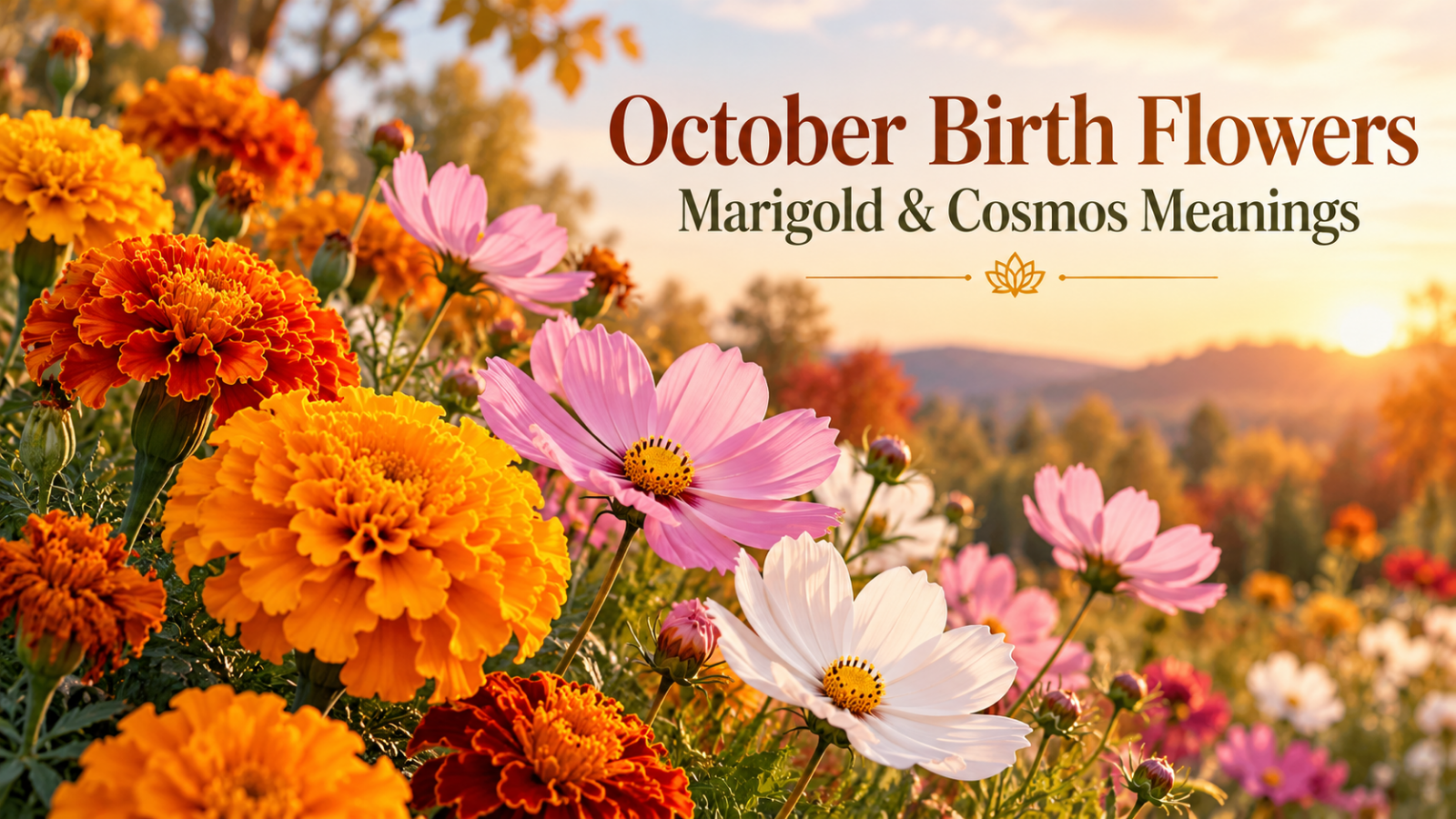 Meaning
October Birth Flowers: Marigold & Cosmos Meanings
Discover the October birth flowers—marigold and cosmos—their meanings, colors, symbolism, history, personality traits, gifting ideas, and cultural significance.
Read the guide →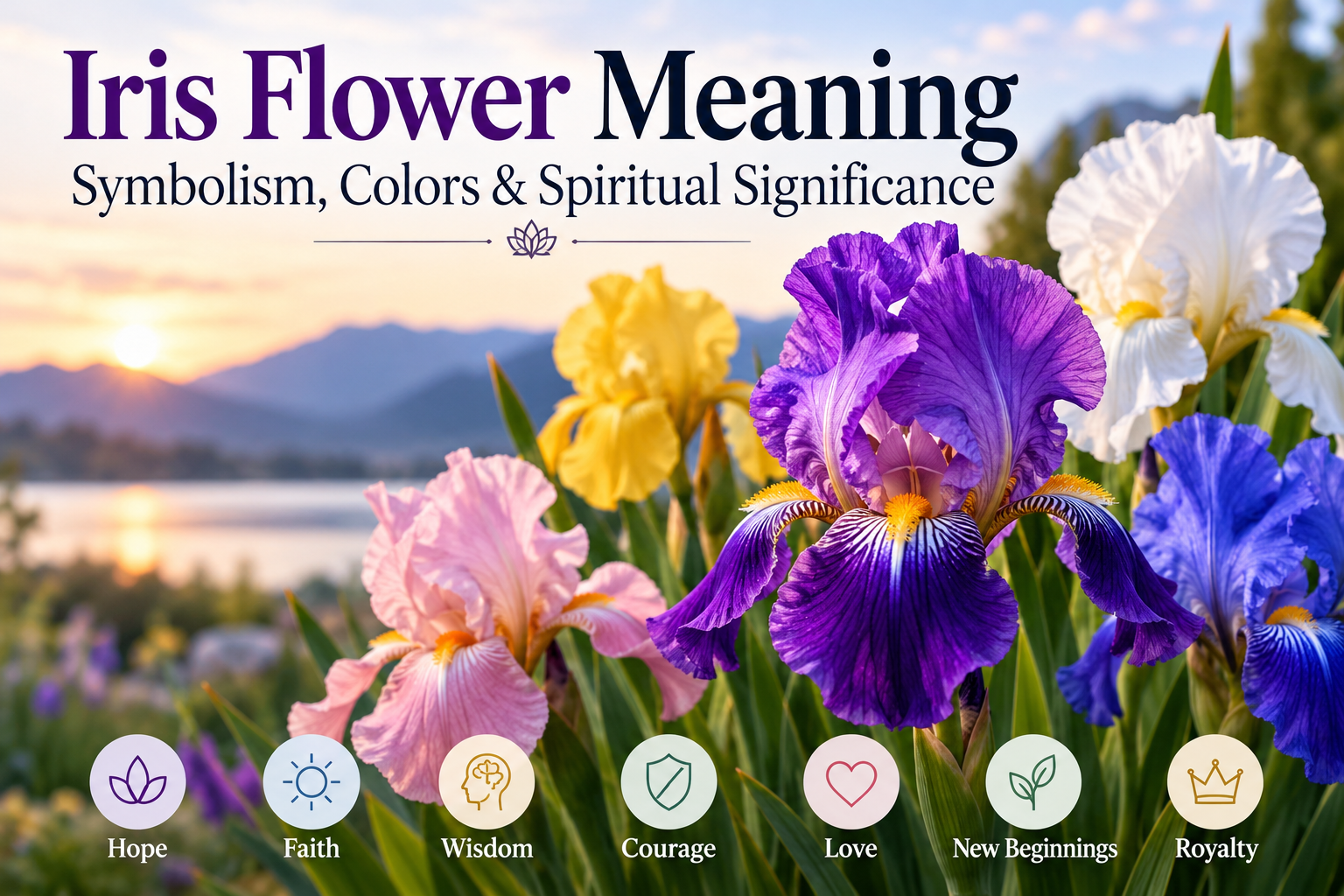 Meaning & Symbolism
Iris Flower Meaning: Colors, Symbolism & Spiritual Significance
Discover the iris flower meaning, including purple, blue, white, yellow and pink iris symbolism, spiritual meanings, Greek mythology, love, hope and gifting.
Read the guide →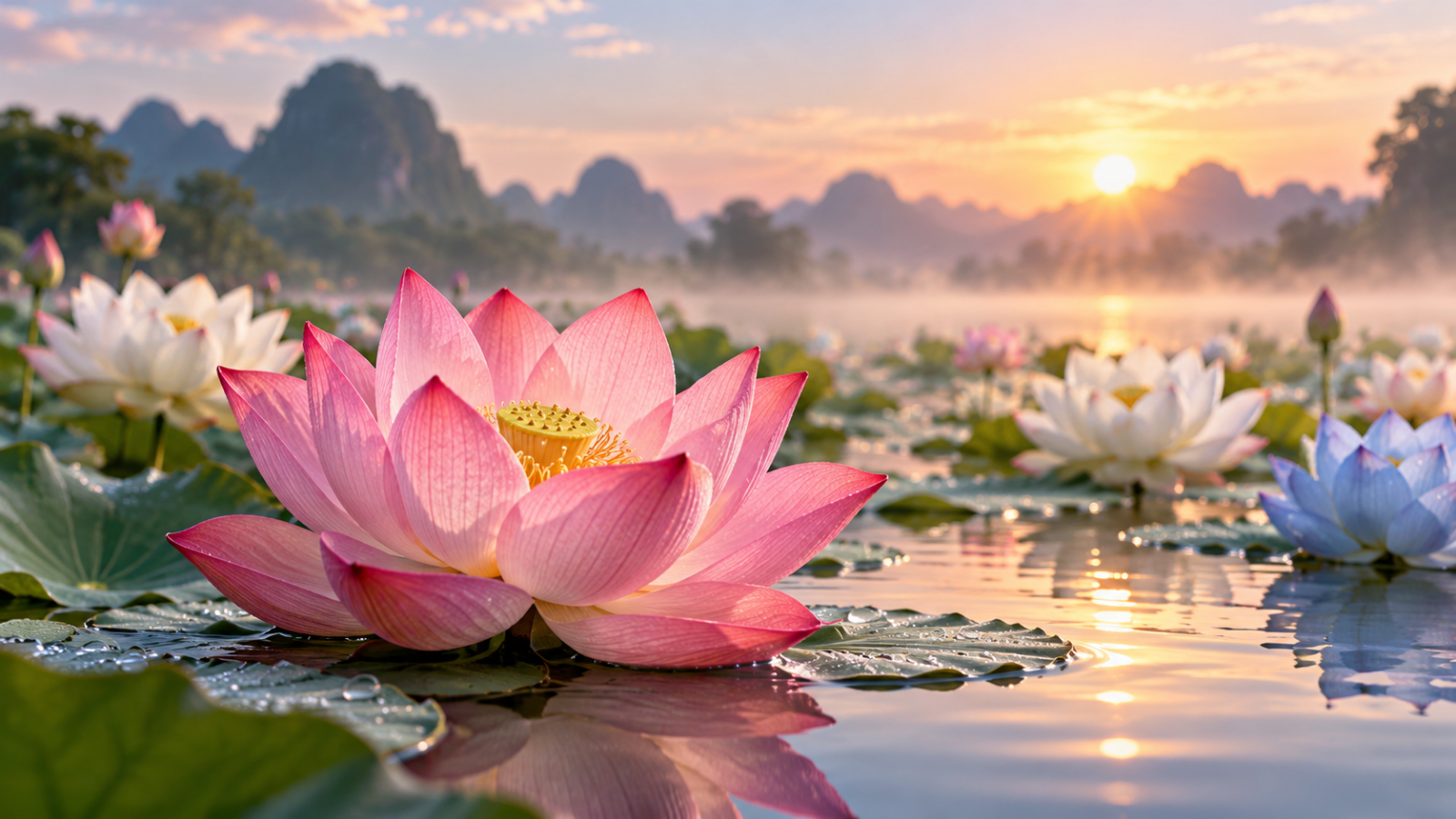 Meaning & Symbolism
Lotus Flower Meaning: Symbolism, Colors & Spiritual Significance
Discover the lotus flower meaning, including spiritual symbolism, rebirth, purity, Buddhism, Hinduism, and what white, pink, blue, red and purple lotuses mean.
Read the guide →