Growing
How Long Do Tulips Last? Vase Life, Bloom Time & Care
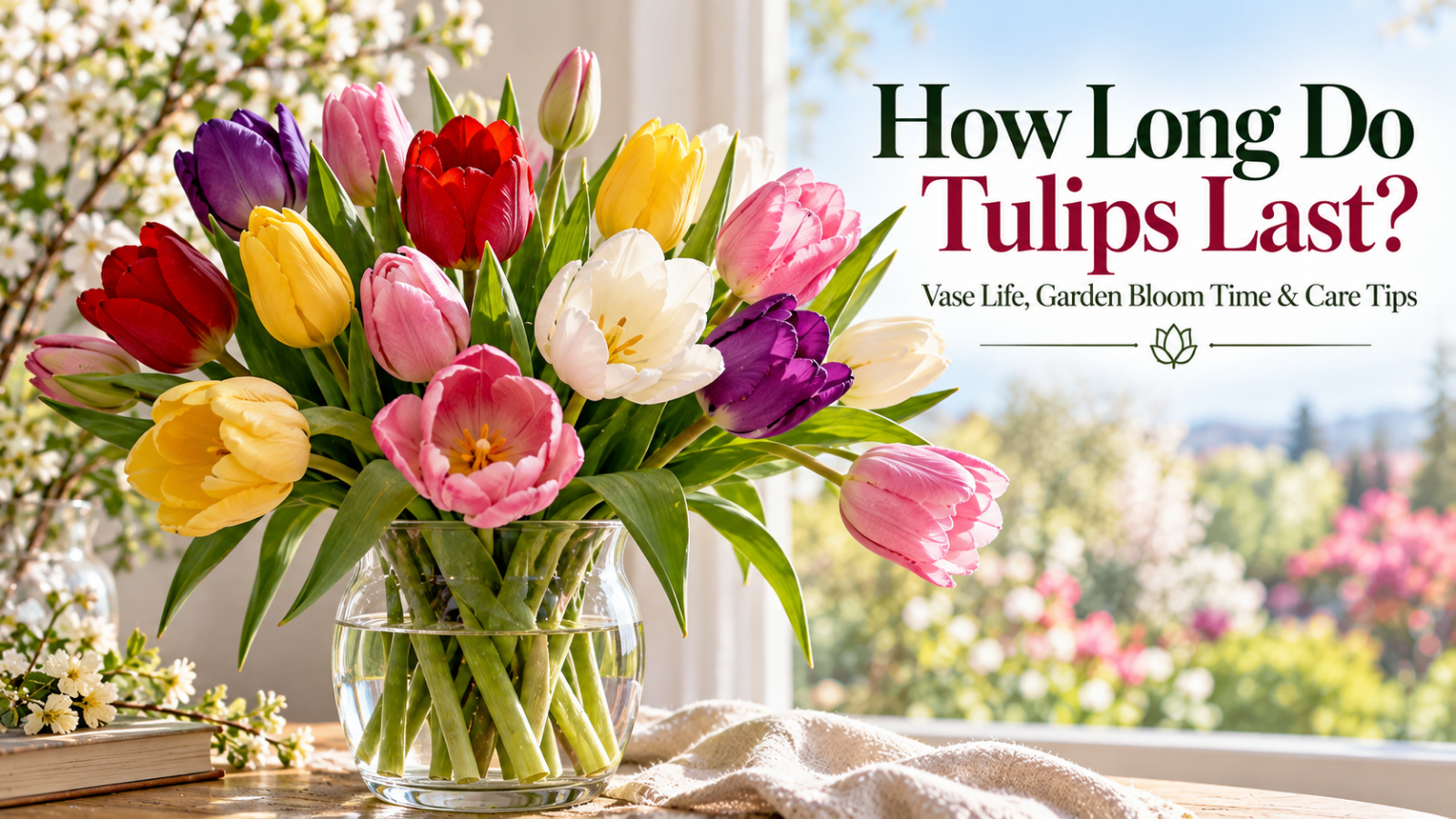
Cut tulips usually last about 5 to 10 days in a vase, although their exact vase life depends on freshness, variety, room temperature, water quality, and how well you care for them.
Tulips bought while their buds are still mostly closed generally last longer than flowers that are already fully open.
Tulips growing outdoors can bloom for roughly one to two weeks per individual flower, while a garden planted with early-, mid-, and late-season tulip varieties can provide color for several weeks.
Potted tulips grown indoors are also relatively short-lived as flowering displays, often looking their best for around one to three weeks, depending on temperature and how advanced the blooms are when purchased.
If you want your tulips to last as long as possible, the most important things are simple:
Start with fresh, tightly budded flowers.
Use a clean vase.
Keep the water fresh.
Keep the stems hydrated.
Place the vase somewhere cool.
Avoid direct sunlight and heat.
Keep tulips away from ripening fruit.
How Long Do Cut Tulips Last?
Cut tulips normally last around 5 to 10 days after being placed in a vase.
Floraly gives essentially the same range, saying properly cared-for tulips can remain attractive for about 5–10 days.
Scientific floriculture literature also describes tulips as relatively short-lived cut flowers, with vase life commonly around 7–10 days after harvest under appropriate postharvest conditions.
The actual number of days you get at home depends on where the flowers are in their life cycle when you buy them.
Tulips in tight bud
These generally last the longest.
If you buy tulips whose buds are still:
closed
firm
strongly colored
only beginning to open
you may enjoy several days of gradual opening before the flowers reach full bloom.
Fully open tulips
Tulips that are already completely open when purchased may still look beautiful, but much of their vase life has already passed.
These may remain attractive for only a few days.
That is why florists often recommend choosing tulips that are showing color but are not fully open yet.
Tulip Lifespan at a Glance
| Type of Tulip | Typical Display Period |
|---|---|
| Cut tulips in a vase | About 5–10 days |
| Cut tulips already fully open | Often shorter |
| Potted indoor tulips | About 1–3 weeks |
| Individual outdoor tulip bloom | Roughly 1–2 weeks |
| Mixed tulip garden | Several weeks with staggered varieties |
| Dried or preserved tulip | Months or longer depending on method |
These are approximate ranges rather than guarantees.
Temperature, maturity, cultivar, and handling can all shorten or extend the visible flowering period.
How Long Do Tulips Last in a Vase?For most people asking “how long do tulips last?”, this is the real question.
Expect approximately one week of attractive vase life, with well-cared-for, very fresh stems sometimes approaching 10 days.
Floraly states that tulips are relatively thirsty cut flowers and recommends fresh water, regular stem trimming, and keeping them away from heat.
Other postharvest research shows why care matters so much: tulip quality declines through processes such as water loss, microbial contamination, petal aging, leaf yellowing, and stem bending.
The fresher the flower and the cleaner its environment, the longer that decline can be delayed.
How to Make Tulips Last LongerYou cannot make cut tulips live indefinitely, but you can avoid shortening their natural vase life.
1. Start With Fresh Tulips
Freshness at purchase matters more than almost anything you do afterward.
Choose tulips with:
firm stems
upright leaves
tightly closed or partly closed buds
strong color
no slimy stem bases
no badly browned petals
Avoid bunches with flowers that are already fully spread open.
Floraly similarly recommends buying flowers while still in bud when possible because fully opened blooms are already farther through their vase life.
2. Use a Clean Vase
Bacteria in dirty containers can interfere with water uptake and speed deterioration.
Before arranging your tulips:
Wash the vase thoroughly.
Rinse away soap residue.
Add fresh water.
Remove any leaves that would sit below the waterline.
Leaves decomposing underwater encourage bacterial growth.
3. Trim the Stem Ends
Before putting tulips in water, trim a small amount from the bottom of each stem using clean, sharp scissors or floral snips.
The goal is to remove dried or damaged stem tissue and improve access to water.
Postharvest tulip research commonly includes re-cutting stems before vase evaluation to remove dried vascular tissue and improve hydration.
You do not need to remove large amounts.
A fresh cut is enough.
4. Keep Tulips Properly Hydrated
Tulips can drink a surprising amount of water.
Check the vase daily, especially when the bouquet is fresh.
Never allow the water level to fall so low that stem ends become exposed.
Floraly specifically lists tulips among the thirstier cut flowers and recommends keeping their water supply topped up.
5. Change the Vase Water Regularly
Fresh water helps reduce microbial buildup.
Change tulip water approximately every one to two days, especially if it begins to look:
cloudy
discolored
slimy
unpleasant-smelling
Floraly similarly recommends changing flower water every day or two when necessary to reduce bacterial buildup.
When changing the water, rinse the vase and remove any decaying plant material.
6. Keep Tulips Cool
Heat shortens the life of cut flowers.
Keep your tulip vase away from:
radiators
heaters
fireplaces
hot windows
strong direct sunlight
heat-producing appliances
A cool room generally helps blooms remain attractive longer.
Floraly also advises keeping cut tulips away from harsh sunlight and strong heat sources because heat accelerates drooping and drying.
7. Keep Tulips Away From Ripening Fruit
Do not put your tulip vase beside a fruit bowl.
Ripening fruits can release ethylene, a plant hormone involved in aging and ripening processes.
Floraly similarly recommends keeping fresh flowers away from ripening fruit because ethylene can shorten flower life.
Apples, bananas, peaches, and other ripening fruits are especially worth keeping separate.
8. Use Flower Food If Available
If your tulips arrive with commercial flower food, follow the directions on the packet.
Commercial flower preservatives are designed to help support cut flowers and control microbial growth.
Research into tulip vase solutions confirms that preservative treatments can significantly influence postharvest vase life.
Do not assume that adding random household ingredients will always help.
A properly formulated flower preservative is more reliable than internet “hacks.”
How Often Should You Change Tulip Water?A practical schedule is every one to two days.
However, the condition of the water matters more than rigidly following a calendar.
Change it sooner if it becomes cloudy or dirty.
Each time you change the water:
Remove the tulips.
Rinse the vase.
Refill it with clean water.
Remove decaying leaves or petals.
Recut the stem ends if needed.
Return the flowers promptly.
The cleaner the environment around the stem ends, the easier it is for the tulips to continue taking up water.
Why Do Tulips Droop?Tulips naturally bend more than many cut flowers.
Drooping can happen because of:
dehydration
warm temperatures
aging
weak stems
insufficient vase support
blocked water uptake
the natural growth behavior of tulips
Unlike many cut flowers, tulip stems can continue elongating after harvest.
Floraly points out that cut tulips continue to grow after they are placed in water, sometimes becoming noticeably taller than when first arranged.
As the stem lengthens and the flower head becomes heavier, the tulip may begin curving toward light or over the edge of the vase.
That does not automatically mean the flower is dead.
How to Help Drooping Tulips
Try the following:
Recut the stem ends.
Give them fresh water.
Use a taller vase for better support.
Move them to a cooler room.
Keep them away from direct sunlight.
Allow them time to rehydrate.
If the petals are still fresh and the stems remain firm, the tulips may recover some of their upright appearance after hydration.
Do Tulips Really Keep Growing After They Are Cut?Yes.
This is one of the most unusual things about cut tulips.
Tulip stems can continue to elongate after being cut and placed in water.
That is why a carefully arranged bouquet may look different several days later.
Some stems become taller than others and begin bending outward.
This continued movement gives tulip arrangements a loose, organic quality that many people actually prefer.
If you want a tightly controlled bouquet, you may need to periodically adjust the stems.
How Long Do Tulips Last Without Water?Tulips should be placed into water as soon as reasonably possible after cutting or purchase.
How long they tolerate being dry depends on:
temperature
humidity
freshness
packaging
whether stem ends are wrapped
how recently they were harvested
A short journey home is usually manageable.
Leaving them for hours in a hot car is not.
Heat and dehydration can rapidly reduce the remaining vase life even if the flowers appear to recover later.
For best results, minimize the amount of time fresh-cut tulips spend without water.
How Long Do Potted Tulips Last?Potted tulips used as indoor displays usually stay attractive for roughly one to three weeks, depending on how far along they are when purchased and how warm the room is.
Tulips held in cooler conditions usually maintain their flowers longer.
A pot whose buds are only beginning to color will generally provide a longer display than one already in full bloom.
Once the flowers fade, the plant does not immediately die.
Its leaves continue helping the bulb store energy.
However, forced indoor tulips are often grown primarily as seasonal displays and may not rebloom reliably indoors without appropriate chilling and aftercare.
How Long Do Tulips Bloom in the Garden?An individual outdoor tulip flower usually looks its best for roughly one to two weeks, depending strongly on weather.
Cool spring conditions can extend flowering.
Hot, dry, windy weather can shorten it.
A garden containing multiple tulip groups can remain colorful much longer because different varieties flower at different times.
Tulips are commonly divided into:
early-season tulips
mid-season tulips
late-season tulips
Planting across these groups can produce several weeks of sequential color instead of one short burst.
Do Tulips Come Back Every Year?Botanically, tulips are perennial bulbs.
However, whether they return and flower well year after year depends heavily on:
cultivar
winter chilling
summer soil conditions
drainage
climate
bulb health
Floraly notes that tulips are naturally perennial but are often treated as annuals where local conditions do not allow reliable reblooming.
This is different from the lifespan of an individual flower.
A tulip bloom may last only days, while the bulb itself can potentially survive for years.
What Temperature Helps Tulips Last Longer?Cooler conditions generally prolong floral display.
Tulips deteriorate more quickly in warm rooms.
For cut flowers, avoid placing them near:
sunny windows
radiators
heating vents
fireplaces
kitchen appliances
For outdoor tulips, unusually hot spring weather often causes flowers to open and fade more quickly.
Cool, mild spring weather usually gives a longer show.
Should Tulips Be in Direct Sunlight?Cut tulips do not need strong direct sunlight.
In fact, intense sun can heat the vase and flowers, accelerating water loss and shortening their attractive lifespan.
Bright, indirect light is generally better for a vase display.
Garden tulips are different because living plants need adequate sunlight to grow and replenish their bulbs.
So remember:
Cut tulips: bright but cool indoor location.
Growing tulips: suitable outdoor light according to cultivar and climate.
Can You Put Tulips With Other Flowers?Yes, but mixed bouquets require some care.
Different flowers:
drink different amounts of water
age at different rates
release different plant compounds
One commonly discussed pairing is tulips and daffodils.
Freshly cut daffodil stems release sap that can interfere with other cut flowers.
If combining them, florists often condition daffodils separately before arranging.
Tulips also grow after cutting, so their height may change relative to other flowers in the arrangement.
How Do You Know When Tulips Are Dying?Aging tulips commonly show:
very soft stems
extreme bending
translucent petals
browning edges
petals falling away
yellowing leaves
slimy stem bases
unpleasant-smelling vase water
Scientific postharvest studies use visible petal wilting, discoloration, and petal loss among indicators that tulip vase life has ended.
Remove badly deteriorated stems from mixed bouquets so they do not reduce the appearance or cleanliness of the remaining flowers.
Should You Remove Tulip Leaves?Remove leaves that would sit below the waterline.
You can leave healthy foliage above the water because it contributes to the bouquet’s appearance.
Submerged leaves are the problem because they break down and encourage bacterial growth.
Does Sugar Make Tulips Last Longer?Household sugar is often suggested as a flower-care trick, but adding sugar alone can also encourage microbial growth.
A properly formulated commercial flower food is preferable because it is designed to balance nutrients with other ingredients that help maintain water quality.
If you do not have flower food, clean water, a clean vase, cool conditions, and proper hydration are more important than experimenting with random kitchen additives.
Does Putting a Coin in Tulip Water Work?This is a popular tulip myth.
Some people place copper coins in tulip water hoping copper will prevent drooping.
Although copper compounds do have antimicrobial properties and scientific researchers have studied copper-based treatments for cut flowers, that does not mean dropping a household coin into a vase reliably reproduces those controlled treatments.
For normal home care, focus on:
fresh water
a clean vase
regular recutting
cool conditions
flower food when available
These are more dependable.
Can You Dry Tulips?Yes.
Tulips are more difficult to air-dry beautifully than sturdier flowers because their petals are soft and hold a lot of moisture.
Silica gel is often a better option if you want to preserve their shape and color.
Floraly recommends silica-based methods for drying tulip flowers rather than relying solely on traditional air drying.
Dried tulips will not retain the same appearance as fresh flowers, but they can last much longer as keepsakes or craft materials.
Are Tulips Toxic to Cats and Dogs?Yes.
Tulips should be kept away from pets that may chew plants.
The bulb contains the highest concentration of irritating compounds, but other plant parts can also cause problems if consumed.
Possible signs after ingestion can include:
drooling
vomiting
gastrointestinal upset
loss of appetite
lethargy
If you suspect a pet has eaten tulip material, contact a veterinarian.
This is especially important if bulbs have been consumed.
How Long Do Tulips Last Compared With Other Cut Flowers?Tulips are not among the longest-lasting cut flowers.
Floraly's broader vase-life guide gives tulips a typical range of around 3–8 days, compared with longer-lived flowers such as chrysanthemums or alstroemeria.
That does not make tulips a poor cut flower.
Their appeal comes from:
graceful movement
strong color
elegant form
continued stem growth
association with spring
You simply need to expect a shorter display than with some sturdier floral species.
Frequently Asked Questions About Tulip LifespanHow long do tulips last?
Cut tulips generally last around 5–10 days in a vase when fresh and properly cared for.
How long do tulips last in a vase?
About one week is a realistic expectation, although very fresh tulips under good conditions may remain attractive closer to 10 days.
How can I make tulips last longer?
Use fresh flowers, a clean vase, fresh water, cool conditions, and keep the bouquet away from direct sun, heaters, and ripening fruit.
How often should I change tulip water?
Change the water every one to two days or whenever it becomes cloudy.
Why do my tulips droop?
Tulips may droop because of dehydration, heat, aging, continued stem growth, or insufficient support from the vase.
Do tulips grow after being cut?
Yes. Tulip stems can continue elongating after harvest, causing arrangements to change shape over several days.
How long do potted tulips last indoors?
Most potted tulips provide roughly one to three weeks of flowering display, depending on temperature and how developed the flowers are when purchased.
How long do tulips bloom outside?
Individual blooms often remain attractive for around one to two weeks, although the exact duration depends heavily on weather and cultivar.
Do tulips come back every year?
Tulips are botanically perennial, but many modern varieties do not rebloom reliably in every climate and are often grown as annual displays.
Should tulips be kept in the sun?
Cut tulips should be kept away from strong direct sunlight and excessive heat. Growing tulips outdoors, however, require suitable garden light.
Can tulips last two weeks in a vase?
It is possible in unusually favorable circumstances, but 5–10 days is a more realistic normal range.
Should you put tulips in cold or warm water?
Clean, cool to room-temperature water is generally suitable for home vase care. The most important factors are cleanliness, hydration, and avoiding excessive heat.
Why are my tulips opening so fast?
Warm rooms, direct sunlight, mature flowers, and advanced bloom stage can cause tulips to open and age more quickly.
Can wilted tulips recover?
Tulips that are mainly dehydrated may improve after their stems are freshly cut and placed in clean water. Flowers that are already severely aged or decaying will not fully recover.
Final Thoughts: How Long Do Tulips Last?So, how long do tulips last?
For fresh-cut tulips, expect approximately 5 to 10 days in a vase.
The exact lifespan depends on how fresh the flowers were when purchased and how they are cared for afterward.
To get the longest possible display:
Buy tulips while they are still in bud.
Use a clean vase.
Keep them well hydrated.
Change the water regularly.
Keep them cool and away from direct sunlight.
Avoid placing them next to ripening fruit.
Also remember that tulips behave differently from many other cut flowers.
They can continue growing and bending after they are cut, so a bouquet that changes shape over several days is completely normal.
Potted and garden tulips may bloom longer than a cut bouquet, but even outdoor tulip flowers are relatively short-lived compared with many other garden plants.
Their beauty may not last forever—but with the right care, you can make the most of every day they are in bloom.
Keep reading
 Meaning & Symbolism
Orchid Flower Meaning: Symbolism, Colors & Spiritual Significance
Discover the orchid flower meaning, including love, beauty, strength, luxury, spiritual symbolism, color meanings, weddings, gifts, tattoos, and cultural history.
Read the guide → Meaning & Symbolism
What Are Posies? Meaning, History & Posy vs Bouquet
What are posies? Learn what a posy bouquet is, its history and meaning, how it differs from a bouquet or nosegay, wedding uses, flower ideas, and how to make one.
Read the guide → Meaning & Symbolism
December Birth Flowers: Narcissus & Holly Meanings
Discover the December birth flowers narcissus and holly their meanings, symbolism, history, personality traits, gifting ideas, tattoo meanings, and festive traditions.
Read the guide →