Meaning & Symbolism
Floriography: The Language of Flowers & Their Meanings
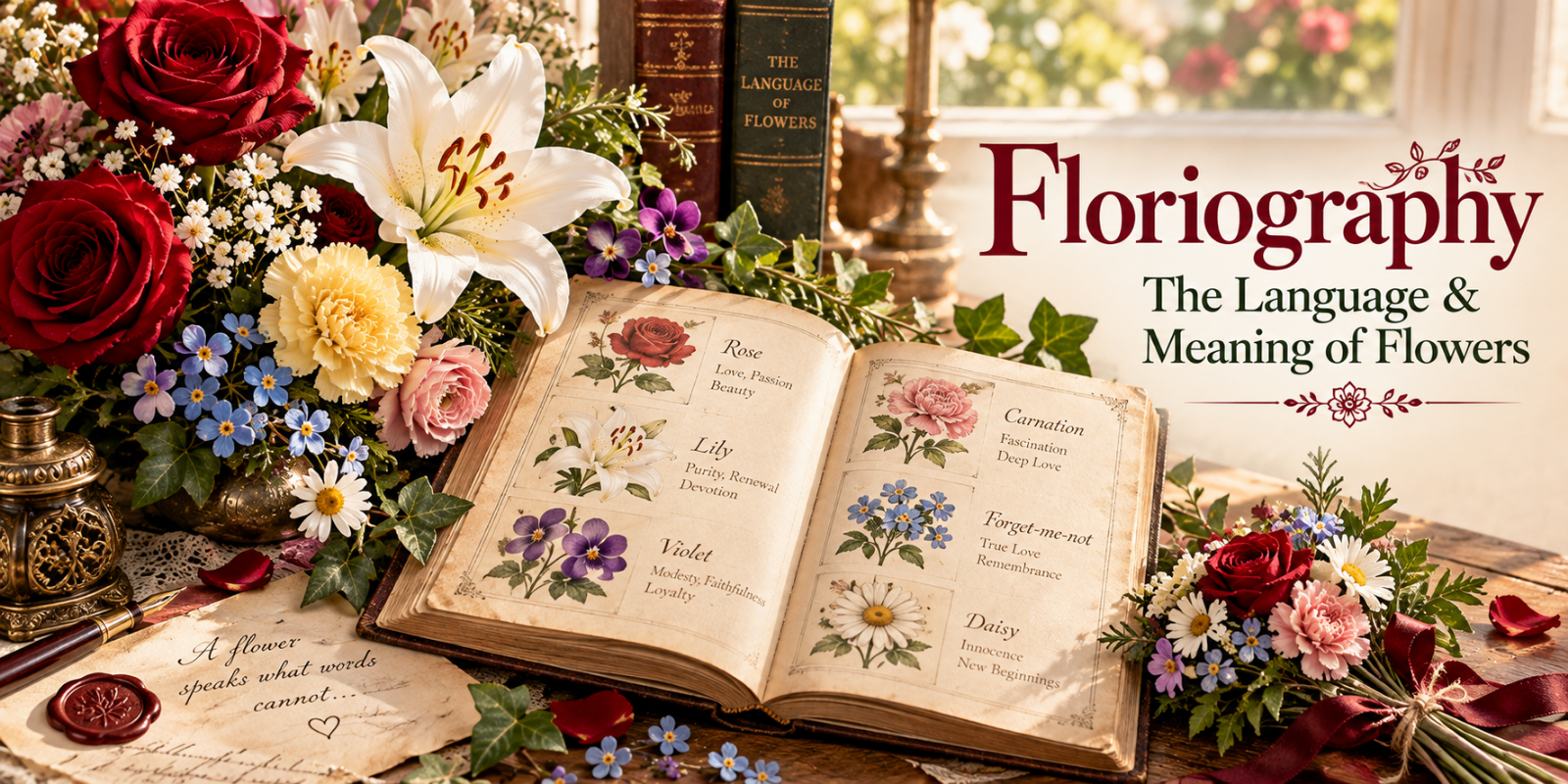
Floriography is the symbolic language of flowers—the practice of using flowers, plants, colors, and sometimes the way they are arranged or presented to communicate emotions and messages.
A red rose may express romantic love.
A forget-me-not may represent remembrance.
A violet can symbolize faithfulness.
A white lily may express purity, peace, or spiritual renewal.
This symbolic system became especially fashionable during the nineteenth century, when illustrated flower dictionaries assigned meanings to hundreds of plants.
Today, floriography is no longer used as a strict secret code, but flower meanings still influence:
Wedding bouquets
Funeral flowers
Valentine's Day gifts
Birth flowers
Anniversary flowers
Tattoos
Jewelry
Floral art
Personal gifts
What Is Floriography?
Floriography means communication through flowers.
It is often called:
The language of flowers
Flower language
Flower symbolism
Victorian flower language
Historically, flowers could be chosen according to meanings associated with their:
Species
Color
Arrangement
Condition
Presentation
A bouquet could therefore function almost like a written message.
Instead of saying:
“I love you.”
someone might give red roses.
Instead of saying:
“Remember me.”
they might use forget-me-nots.
Instead of saying:
“I am faithful to you.”
they might choose violets.
Was Floriography Really a Victorian Secret Language?
Yes—but with an important qualification.
Flower meanings became extremely fashionable during the Victorian period, especially in Britain and America.
However, floriography was not one perfectly standardized language.
Different flower dictionaries sometimes assigned different meanings to the same plant.
So it is better to think of Victorian floriography as a popular symbolic tradition rather than a rigid code understood identically by everyone.
That distinction matters when interpreting flower meanings today.
Where Did Floriography Come From?
Flowers have carried symbolic meanings for thousands of years.
Ancient cultures connected flowers with:
Gods
Religion
Love
Death
Fertility
Seasonal change
Victory
Mourning
But the specific flower-language system commonly called floriography became especially popular in Europe during the nineteenth century.
French flower-language publications played a major role.
One of the most influential was Charlotte de Latour’s Le langage des fleurs, published in 1819.
After that, flower dictionaries became fashionable throughout Britain and America.
By the Victorian era, books explaining hundreds of flower meanings had become extremely popular.
Lady Mary Wortley Montagu and the Language of Flowers
Lady Mary Wortley Montagu is often credited with introducing the concept of flower communication to Britain after living in the Ottoman Empire.
However, this story is frequently simplified.
Her writings helped Europeans become fascinated with Ottoman symbolic communication, but the structured Victorian flower-language tradition developed later through European literature and especially nineteenth-century French flower dictionaries.
So it is more accurate to say that Montagu influenced European interest in symbolic communication rather than single-handedly inventing Victorian floriography.
How Victorian Floriography WorkedVictorian flower language could involve much more than simply choosing a flower.
Meaning might depend on:
Flower species
Color
Number
Arrangement
Presentation
Condition
Some later flower-language traditions even assigned meaning to whether flowers were handed with the right or left hand.
A bouquet could therefore theoretically function like a sentence.
Flower Type
The flower itself carried the core message.
For example:
Rose: love
Violet: faithfulness
Daisy: innocence
Forget-me-not: remembrance
Flower Color
Color could dramatically change the meaning.
A red rose and yellow rose did not necessarily communicate the same emotion.
Arrangement
Combining flowers allowed several ideas to be communicated together.
For example:
Red rose + forget-me-not
could suggest:
romantic love + lasting remembrance
Presentation
Some Victorian traditions also assigned meanings to how a flower was handed or positioned.
These rules were never perfectly standardized, but they added another playful layer to floriography.
Flower Color MeaningsColor remains one of the most recognizable parts of modern flower symbolism.
| Flower Color | Common Meaning |
|---|---|
| Red | Love, passion, desire |
| Pink | Affection, admiration, gratitude |
| White | Purity, innocence, peace |
| Yellow | Friendship, joy, optimism |
| Orange | Enthusiasm, energy, confidence |
| Purple | Dignity, royalty, admiration |
| Blue | Trust, calmness, loyalty |
| Green | Renewal, growth, good fortune |
These meanings are general guidelines rather than fixed universal rules.
The flower species can significantly modify the message.
Red Flower MeaningRed flowers commonly symbolize:
Passion
Romantic love
Desire
Courage
Intensity
Popular red flowers include:
Roses
Tulips
Lilies
Dahlias
Carnations
Chrysanthemums
Red roses remain the most universally recognized romantic flowers.
Pink Flower MeaningPink flowers often represent:
Affection
Appreciation
Admiration
Gentle love
Gratitude
They are ideal when you want warmth without the intensity of red.
Popular pink flowers include:
Roses
Lilies
Orchids
Peonies
Carnations
Dahlias
White flowers commonly symbolize:
Purity
Innocence
Peace
Spirituality
Remembrance
New beginnings
This explains why white flowers appear frequently at both:
Weddings
Funerals
The meaning changes according to context.
Yellow Flower MeaningModern yellow flower symbolism centers on:
Friendship
Happiness
Optimism
Joy
Positive energy
However, Victorian meanings could sometimes be less cheerful.
For example, yellow carnations could represent rejection or disappointment.
This demonstrates why historical and modern flower symbolism should not always be treated as identical.
Orange Flower MeaningOrange flowers commonly represent:
Enthusiasm
Confidence
Energy
Excitement
Creativity
They are especially suitable for:
Promotions
Graduations
New jobs
Celebrations
Purple flowers symbolize:
Dignity
Royalty
Admiration
Wisdom
Spirituality
Popular examples include:
Purple orchids
Asters
Violets
Irises
Dahlias
Blue flowers commonly represent:
Loyalty
Trust
Peace
Calm
Faithfulness
Naturally blue flowers are less common, which can also give them associations with rarity and uniqueness.
Green Flower MeaningGreen flowers often symbolize:
Renewal
Growth
Prosperity
Health
New beginnings
They work particularly well for someone starting a new stage of life.
Popular Flowers and Their MeaningsRose Meaning
Roses are among the most recognizable symbolic flowers.
They commonly represent:
Love
Beauty
Passion
Devotion
Admiration
Color matters greatly.
Red: passionate love
Pink: admiration and gratitude
White: purity and new beginnings
Yellow: friendship and happiness
Lavender: enchantment
For the complete guide, read our Rose Flower Meaning.
Lily MeaningLilies symbolize:
Purity
Rebirth
Renewal
Remembrance
Devotion
White lilies are particularly important at:
Weddings
Funerals
Easter celebrations
For complete symbolism, see our Lily Flower Meaning guide.
Daisy MeaningDaisies symbolize:
Innocence
Purity
Happiness
Loyal love
New beginnings
Their simple appearance and association with childhood strengthen their meaning of innocence.
Read our Daisy Flower Meaning guide.
Orchid MeaningOrchids represent:
Beauty
Luxury
Admiration
Refinement
Love
Uniqueness
Purple orchids emphasize dignity.
Pink orchids represent affection.
White orchids symbolize purity and elegance.
Explore our Orchid Flower Meaning guide.
Dahlia MeaningDahlias symbolize:
Inner strength
Commitment
Dignity
Individuality
Lasting love
Their dramatic diversity has also made them symbols of standing confidently in your individuality.
Read our Dahlia Flower Meaning.
Daffodil MeaningDaffodils represent:
Rebirth
Hope
New beginnings
Resilience
Renewal
Their early spring flowering gives them strong associations with life returning after winter.
See our Daffodil Flower Meaning.
Aster MeaningAsters symbolize:
Wisdom
Patience
Faith
Devotion
Love
Their star-like appearance also gives them celestial symbolism.
Read our Aster Flower Meaning.
Gladiolus MeaningGladiolus symbolizes:
Strength
Integrity
Courage
Perseverance
Remembrance
Its sword-shaped leaves inspired its name and much of its symbolism.
Explore our Gladiolus Flower Meaning.
Iris MeaningIris flowers commonly symbolize:
Hope
Faith
Wisdom
Courage
Communication
Purple irises often emphasize dignity and wisdom.
Violet MeaningViolets symbolize:
Faithfulness
Modesty
Loyalty
Humility
Spiritual wisdom
They are also February birth flowers.
See our February Birth Flowers guide.
Chrysanthemum MeaningChrysanthemums represent:
Joy
Loyalty
Friendship
Longevity
Resilience
However, meaning changes significantly by culture.
In some European countries they are strongly associated with funerals.
They are also the primary November birth flower.
See our November Birth Flowers.
Marigold MeaningMarigolds symbolize:
Warmth
Creativity
Passion
Prosperity
Remembrance
Their symbolism is especially prominent in Mexican Día de los Muertos traditions.
Cosmos MeaningCosmos flowers symbolize:
Harmony
Balance
Peace
Love
Order
Their name comes from the Greek idea of an ordered or harmonious universe.
Read our October Birth Flowers guide.
Water Lily MeaningWater lilies symbolize:
Purity
Rebirth
Peace
Enlightenment
Spiritual awakening
Water lilies should not be confused with lotus flowers.
See our July Birth Flowers guide.
Lotus MeaningLotus flowers represent:
Spiritual awakening
Rebirth
Purity
Resilience
Enlightenment
Their ability to rise from muddy water helped create one of the most powerful symbols of spiritual growth.
Read our Lotus Flower Meaning.
Flowers That Mean LoveFlowers associated with love include:
Red rose
Red tulip
Dahlia
Peony
Orchid
Red aster
Carnation
Honeysuckle
For romantic gifting ideas, see our Valentine’s Day Flowers guide.
Flowers That Mean FriendshipFlowers associated with friendship include:
Yellow roses
Sunflowers
Yellow chrysanthemums
Pink roses
Yellow daisies
These are often better choices than strongly romantic red flowers when the relationship is platonic.
Flowers That Mean RemembranceFlowers connected with remembrance include:
Forget-me-not
Poppy
Marigold
White lily
White chrysanthemum
Aster
Context matters significantly because remembrance traditions vary between cultures.
Flowers That Mean New BeginningsFlowers associated with new beginnings include:
Daffodil
Daisy
Snowdrop
Lily of the valley
Narcissus
White rose
These make thoughtful gifts for:
New jobs
Graduation
Moving home
Recovery
Major life changes
Flowers connected with strength include:
Gladiolus
Dahlia
Protea
Cactus flowers
Gladiolus represents courage and integrity.
Dahlia represents inner strength and dignity.
Flowers That Mean PurityFlowers associated with purity include:
White lily
Daisy
White rose
Lotus
Lily of the valley
Purity symbolism often overlaps with:
Innocence
Spirituality
New beginnings
Hope-related flowers include:
Daffodil
Iris
Snowdrop
Aster
Hawthorn
Daffodils are particularly strong symbols of hope because they bloom after winter.
Flowers That Mean LoyaltyFlowers commonly associated with loyalty include:
Violet
Blue aster
Chrysanthemum
Forget-me-not
Sunflower
These work especially well for friendships and long-term relationships.
Flower Meanings for WeddingsWedding flower symbolism often focuses on:
Love
Commitment
Purity
Loyalty
New beginnings
Popular symbolic wedding flowers include:
Rose
Love and devotion.
Lily
Purity and renewal.
Peony
Happy marriage and prosperity.
Orchid
Beauty and refined love.
Dahlia
Commitment and enduring affection.
Flower Meanings for FuneralsFuneral flower symbolism usually focuses on:
Remembrance
Peace
Respect
Spiritual rebirth
Continuing love
Common funeral flowers include:
White Lily
Peace and spiritual renewal.
White Chrysanthemum
Remembrance and mourning in many cultures.
Rose
Continuing love.
Aster
Remembrance and loyalty.
Cultural differences matter greatly when choosing sympathy flowers.
Flower Meanings for ApologiesFlowers associated with apology or reconciliation include:
Daffodil
White rose
Purple hyacinth
White peony
Daffodils are especially appropriate because they symbolize forgiveness and new beginnings.
Birth Flowers and FloriographyBirth flowers combine monthly tradition with flower symbolism.
For example:
January: Carnation
February: Violet
March: Daffodil
April: Daisy
May: Lily of the Valley
June: Rose
July: Larkspur
August: Gladiolus
September: Aster
October: Marigold
November: Chrysanthemum
December: Narcissus
For the complete guide, read our Birth Flowers by Month.
Can One Flower Have More Than One Meaning?Absolutely.
Flower symbolism depends on:
Culture
Historical period
Color
Occasion
Source
A white chrysanthemum may symbolize honesty in one tradition and mourning in another.
A yellow rose historically carried associations with jealousy but today usually symbolizes friendship.
This is why flower meanings should be treated as symbolic traditions, not universal scientific definitions.
Why Do Flower Dictionaries Disagree?Victorian flower dictionaries were produced by many different writers.
There was no central authority regulating meanings.
Authors often drew from:
Mythology
Religion
Literature
Folklore
Color symbolism
Personal interpretation
As a result, one flower might receive different meanings in different dictionaries.
This is one of the most important things to understand about historical floriography.
Is Floriography Still Used Today?Yes, although not as a formal secret language.
Modern floriography survives through:
Valentine's Day traditions
Wedding bouquets
Funeral arrangements
Birth flowers
Anniversary flowers
Tattoos
Floral jewelry
Personalized gifts
Most people may not use the term “floriography,” but they still understand ideas such as:
red rose = love
white lily = purity
yellow rose = friendship
The language has become cultural rather than secret.
How to Create a Meaningful BouquetYou can use floriography to design a bouquet around a specific message.
Step 1: Decide the Message
Choose the emotion first.
Examples:
Love
Friendship
Apology
Congratulations
Remembrance
Step 2: Choose the Main Flower
The main bloom communicates the central message.
For example:
Red rose = love
Step 3: Add Supporting Flowers
Add secondary ideas.
Example:
Red rose + forget-me-not
can represent:
love + remembrance
Step 4: Consider Color
Color can reinforce or modify the message.
Step 5: Consider the Recipient
Their actual preferences matter more than following a Victorian dictionary perfectly.
If someone loves yellow roses, give them yellow roses—even if an old dictionary assigns another meaning.
Example Floriography BouquetsRomantic Love Bouquet
Red rose
Red tulip
Pink orchid
Message:
Passion + perfect love + admiration
Friendship Bouquet
Yellow rose
Sunflower
Daisy
Message:
Friendship + loyalty + happiness
New Beginnings Bouquet
Daffodil
Daisy
White rose
Message:
Hope + renewal + fresh beginnings
Remembrance Bouquet
White lily
Forget-me-not
Aster
Message:
Peace + remembrance + enduring devotion
Strength Bouquet
Gladiolus
Dahlia
Iris
Message:
Courage + inner strength + hope
What Is a Posy in Floriography?A posy is a small hand-held bunch of flowers.
During the Victorian period, posies became particularly associated with symbolic flower messages.
Different flowers could theoretically be combined to create a coded statement.
Today, posies are usually chosen for beauty rather than strict symbolic grammar.
Read our complete guide to What Are Posies?.
Frequently Asked Questions About FloriographyWhat is floriography?
Floriography is the symbolic language of flowers—the practice of using flowers, plants, colors, and arrangements to communicate emotions or messages.
What is another name for floriography?
It is commonly called the language of flowers.
When was floriography popular?
It became particularly fashionable during the nineteenth century and reached widespread popularity during the Victorian era.
Where did Victorian flower language come from?
The nineteenth-century European flower-language craze was strongly shaped by French publications such as Charlotte de Latour’s Le langage des fleurs from 1819.
Did Victorians really communicate with flowers?
Flower meanings were extremely popular in Victorian books and culture. How consistently people used them as precise real-world secret codes is harder to prove.
Did every flower have one fixed meaning?
No. Different flower dictionaries often assigned different meanings to the same plant.
What flower means love?
The red rose is the best-known symbol of romantic love.
What flower means friendship?
Yellow roses and sunflowers are common symbols of friendship.
What flower means remembrance?
Forget-me-nots are among the clearest symbols of remembrance.
What flower symbolizes new beginnings?
Daffodils and daisies are strongly associated with new beginnings.
What flower symbolizes strength?
Gladiolus and dahlia both carry strong meanings related to strength.
What flower symbolizes purity?
White lilies, daisies, white roses, and lotus flowers can all symbolize purity.
What flower means loyalty?
Violets, blue asters, chrysanthemums, and forget-me-nots can symbolize loyalty or faithfulness.
Do flower colors have meanings?
Yes. Red commonly represents passion, pink affection, white purity, yellow friendship, purple dignity, and green renewal.
Is floriography still relevant today?
Yes. Flower symbolism continues to influence weddings, funerals, Valentine’s gifts, tattoos, birth flowers, and anniversary bouquets.
Final Thoughts: What Is the Language of Flowers?Floriography is the language of flowers—a tradition of assigning symbolic meanings to flowers, plants, colors, and bouquets.
Its most famous period came during the nineteenth century, when flower dictionaries became fashionable throughout Europe and America.
But flower symbolism did not begin with the Victorians, and it did not end with them.
Today we still instinctively understand many floral messages:
Red roses mean love.
Yellow flowers suggest friendship.
White lilies symbolize purity and remembrance.
Daffodils represent new beginnings.
Forget-me-nots symbolize remembrance.
The most important thing to remember is that flower meanings are cultural traditions rather than universal laws.
They can vary by:
Country
Historical period
Source
Color
Occasion
That flexibility is part of what makes floriography fascinating.
A flower does not merely decorate a message.
Sometimes, the flower is the message.
For deeper symbolism, explore our guides to Rose Flower Meaning, Lily Flower Meaning, Daisy Flower Meaning, Orchid Flower Meaning, and Birth Flowers by Month.
Keep reading
 Meaning & Symbolism
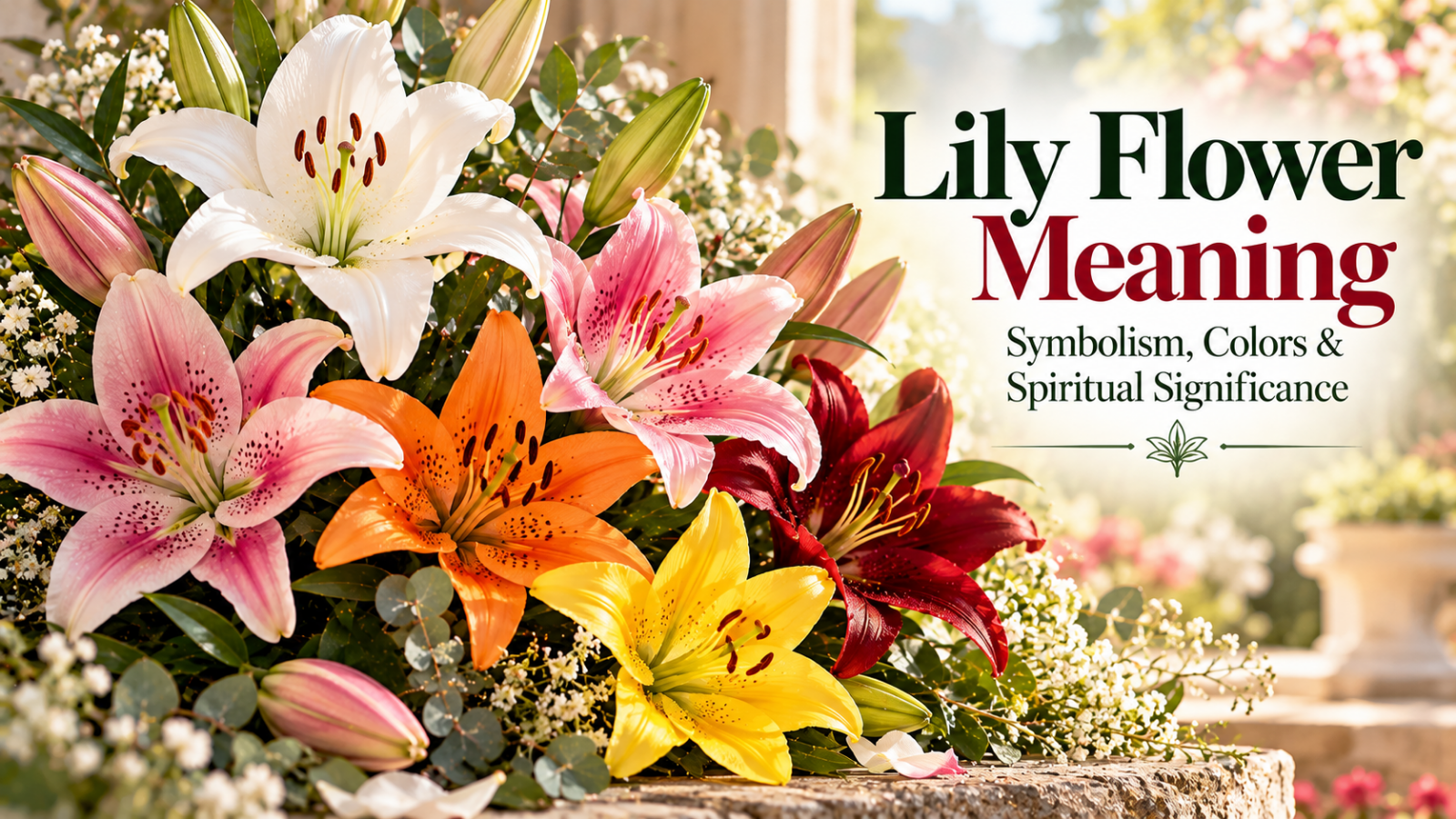
Lily Flower Meaning: Symbolism, Colors & Spiritual Significance
Discover the lily flower meaning, including purity, rebirth, love, spiritual symbolism, color meanings, weddings, funerals, Easter, tattoos, and pet safety.
Read the guide →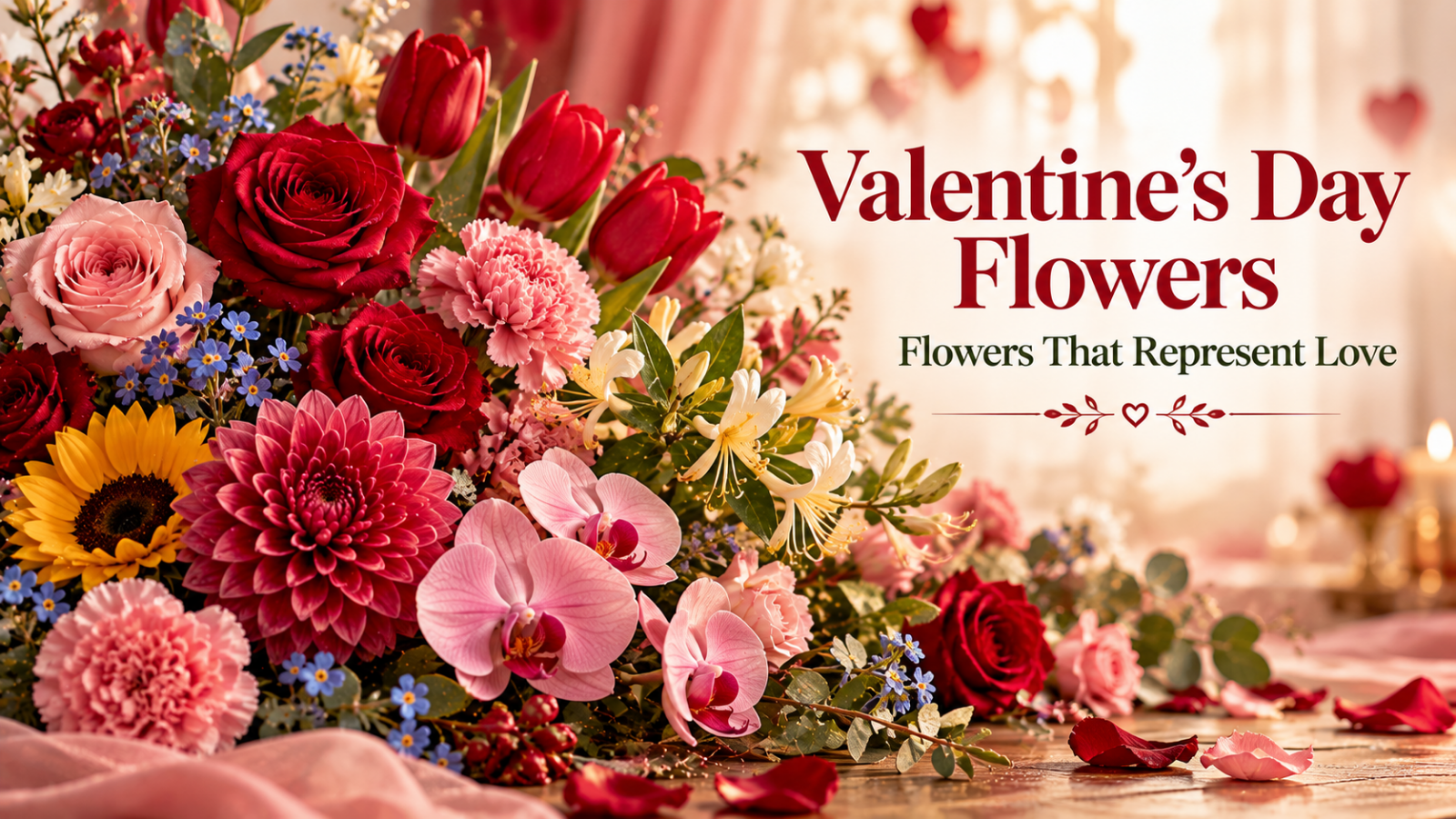 Meaning & Symbolism
Valentine’s Day Flowers: 15 Flowers That Represent Love
Discover the best Valentine’s Day flowers and what they mean, from red roses and tulips to orchids, dahlias, carnations, peonies, and meaningful alternatives.
Read the guide →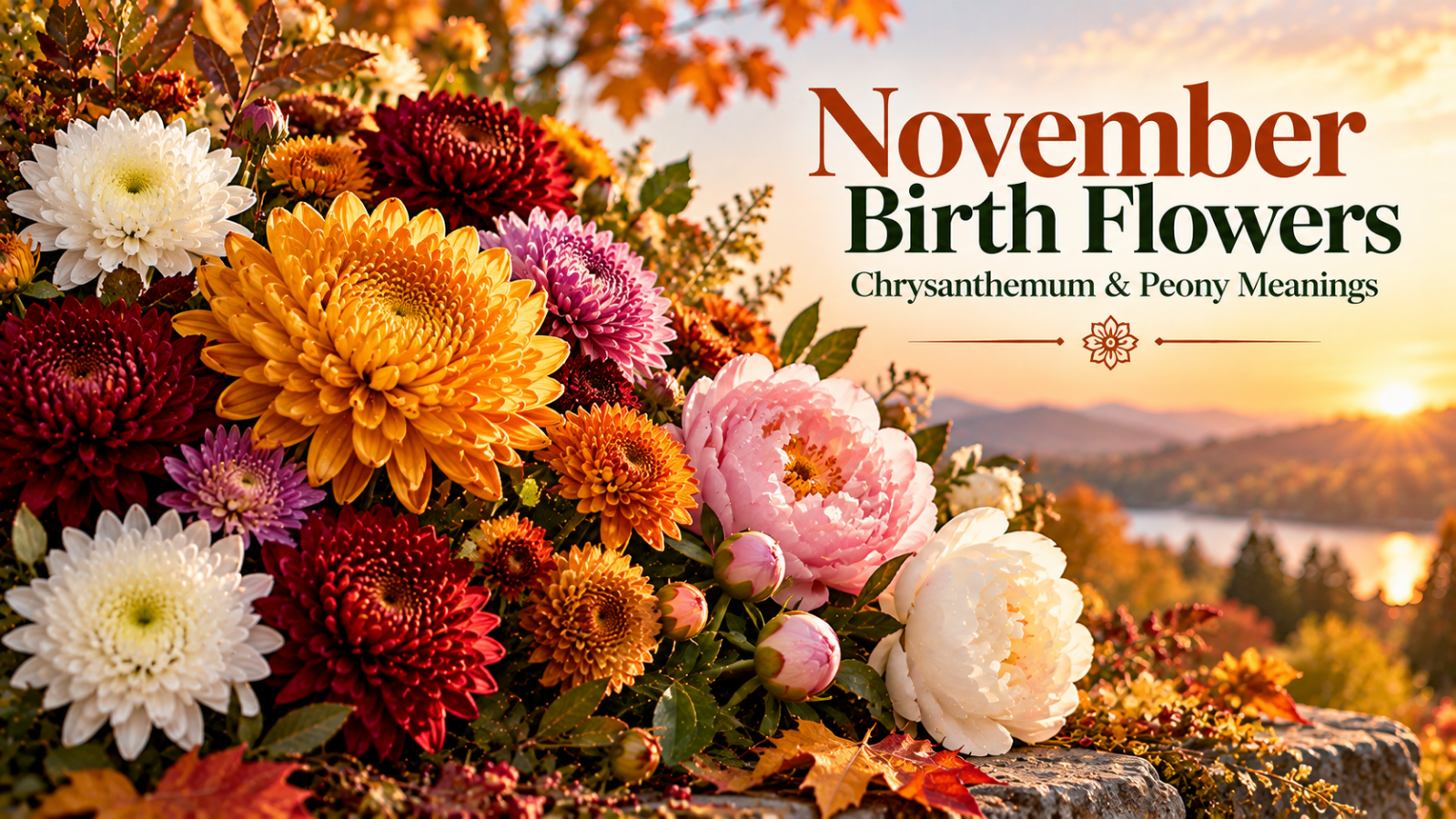 Meaning & Symbolism
November Birth Flowers: Chrysanthemum & Peony Meanings
Discover the November birth flowers—chrysanthemum and peony—their meanings, colors, cultural symbolism, personality traits, tattoos, gifting ideas, and pet safety.
Read the guide →